Shirley
England, fictionBritish and irish fiction (fictional works by one author)Fiction, historical, generalNapoleonic wars, 1800-1815, fictionFiction, historical
4.1
Open LibraryAbout this book
<p><i>Shirley</i>, published in 1849, was <a href="https://standardebooks.org/ebooks/charlotte-bronte">Charlotte Brontë’s</a> second novel after <i><a href="https://standardebooks.org/ebooks/charlotte-bronte/jane-eyre">Jane Eyre</a></i>. Published under her pseudonym of “Currer Bell,” it differs in several respects from that earlier work. It is written in the third person with an omniscient narrator, rather than the first-person of <i>Jane Eyre</i>, and incorporates the themes of industrial change and the plight of unemployed workers. It also features strong pleas for the recognition of women’s intellect and right to their independence of thought and action.</p> <p>Set in the West Riding of Yorkshire during the Napoleonic period of the early 19th Century, the novel describes the confrontations between textile manufacturers and organized groups of workers protesting the introduction of mechanical looms. Three characters stand out: Robert Moore, a mill-owner determined to introduce modern methods despite sometimes violent opposition; his young cousin Caroline Helstone, who falls deeply in love with Robert; and Shirley Keeldar, a rich heiress who comes to live in the estate of Fieldhead, on whose land Robert’s mill stands. Robert’s business is in trouble, not so much because of the protests of the workers but because of a government decree which prevents him selling his finished cloth overseas during the duration of the war with Napoleon. He receives a loan from Miss Keeldar, and her interest in him seems to be becoming a romantic one, much to the distress of Caroline, who…
Themes & subjects
England, fictionBritish and irish fiction (fictional works by one author)Fiction, historical, generalNapoleonic wars, 1800-1815, fictionFiction, historicalTextile industry
About the author
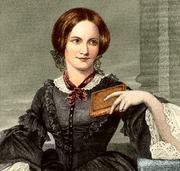
Charlotte Brontë
21 April 1816 – 31 March 1855
Charlotte Brontë was an English novelist, the eldest of the three Brontë sisters whose novels are English literature standards. Under the pen name Currer Bell, she wrote Jane Eyre. ([Source][1].) [1]: http://en.wikipedia.org/wiki/Charlotte_Brontë Her sisters, Anne and Emily, first published their works as Acton and Ellis Bell.
Reviews
No reviews yet — be the first to write one from the Log screen.
Quotes
No quotes yet.