El Aleph
CuentosShort storiesTranslations into ItalianSocial life and customsFiction
4.3
Open LibraryFirst lines
–Está en el sótano del comedor –explicó, aligerada su dicción por la angustia–. Es mío, es mío: yo lo descubrí en la niñez, antes de la edad escolar. La escalera del sótano es empinada, mis tíos me tenían prohibido el descenso, pero alguien dijo que había un mundo en el sótano. Se refería, lo supe después, a un baúl, pero yo entendí que había un mundo. Bajé secretamente, rodé por la escalera vedad…
About this book
In Borges' story, the Aleph is a point in space that contains all other points. Anyone who gazes into it can see everything in the universe from every angle simultaneously, without distortion, overlapping, or confusion. The story traces the theme of infinity found in several of Borges' other works, such as "The Book of Sand". As in many of Borges' short stories, the protagonist is a fictionalized version of the author. At the beginning of the story, he is mourning the recent death of a woman whom he loved, named Beatriz Viterbo, and resolves to stop by the house of her family to pay his respects. Over time, he comes to know her first cousin, Carlos Argentino Daneri, a mediocre poet with a vastly exaggerated view of his own talent who has made it his lifelong quest to write an epic poem that describes every single location on the planet in excruciatingly fine detail. Later in the story, a business on the same street attempts to tear down Daneri's house in the course of its expansion. Daneri becomes enraged, explaining to the narrator that he must keep the house in order to finish his poem, because the cellar contains an Aleph which he is using to write the poem. Though by now he believes Daneri to be quite insane, the narrator proposes without waiting for an answer to come to the house and see the Aleph for himself. Left alone in the darkness of the cellar, the narrator begins to fear that Daneri is conspiring to kill him, and then he sees the Aleph for himself: "On the back part of the step, toward the right, I saw a small iridescent sphere of almost unbearable brilliance. …
Themes & subjects
CuentosShort storiesTranslations into ItalianSocial life and customsFictionContinental european fiction (fictional works by one author)
Characters & people
Jorge Luis Borges (1899-1986)St. AgustineSt. Thomas AquinasBoetius
Setting
LondonAthensParisRome1770-18301810-189020th century
About the author
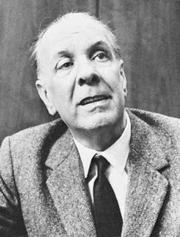
Jorge Luis Borges
24 Aug 1899 – 14 Jun 1986
Jorge Francisco Isidoro Luis Borges (Buenos Aires, 24 de agosto de 1899 - Ginebra, 14 de junio de 1986), más conocido como Jorge Luis Borges, fue un destacado escritor de cuentos, poemas y ensayos argentino, extensamente considerado una figura clave tanto para la literatura en habla hispana como para la literatura universal. También fue bibliotecario, profesor, conferencista y traductor. Sus dos libros más conocidos, *Ficciones* y *El Aleph,* publicados en los años cuarenta, son recopilaciones de cuentos conectados por temas comunes de forma fantástica, como los sueños, los laberintos, las bibliotecas, los espejos, los autores ficticios y las mitologías europeas (como la griega y la nórdica)…
Reviews
No reviews yet — be the first to write one from the Log screen.
Quotes
No quotes yet.