About this book
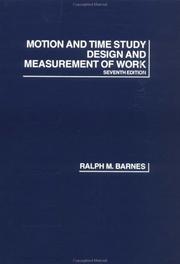
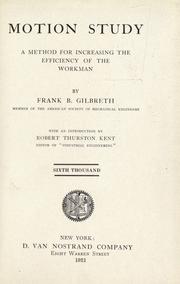
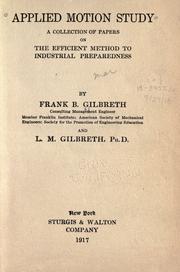
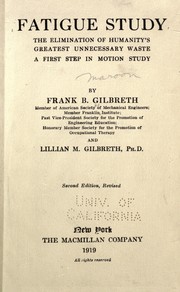
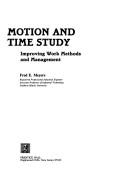
PREFACE TO FIRST EDITION The present trend toward increased efficiency in all kinds of work has brought about a widespread interest in motion and time study. Wherever manual work is performed there is always the problem of finding the most economical way of doing the task, and then of determining the amount of work that should be done in a given period of time. This is ordinarily accompanied by some incentive plan of wage payment. Motion and time study provides a technique that is unequalled for finding methods of greatest economy and for measuring labor accomplishment. The terms "time study" and "motion study" have been given many interpretations since their origin. Time study, originated by Taylor, was mainly used for rate setting; and motion study, developed by the Gilbreths, was largely employed for improving methods. One group saw time study only as a means of determining the size of the task that should constitute a day's work, using the stop watch as the timing device. Another group saw motion study only as an expensive and elaborate technique for determining a good method of doing work. Today the discussion of the comparative value of using either the one or the other of the two techniques has largely passed; industry has found that motion study and time study are inseparable, as their combined use in many factories and offices now demonstrates. Taking cognizance of present trends and recognizing the fact that motion study always precedes the setting of a time standard, we shall in this volume use the term "motion and time study" as referring to this broa…
Themes & subjects
Motion studyTime study
First published 1949Characters & people
About the author
Ralph M. Barnes
1900
Reviews
No reviews yet — be the first to write one from the Log screen.
Quotes
No quotes yet.