Elegiae
4.0
Open LibraryFirst lines
CYNTHIA was the first To capture with her eyes my pitiable self: Till then I was free from desire's contagion.
About this book
Of all the Greek and Latin love poets, Propertius (c.50-10 BC) is one of those who perhaps holds most immediate appeal for the twentieth century reader. His helpless infatuation for the sinister figure of his mistress Cynthia forms the main subject of his poetry, and is analysed with a tormented but witty grandeur in all its changing moods - from ecstacy to suicidal despair. The son of an Umbrian landowner who fought on the wrong side in the Civil War after Caesar's murder, he lost his father and most of his family estate in boyhood and was brought up by his mother. He was able nevertheless to reject a legal or military career and to devote his life to the art of poetry, in which he is a far more self-conscious practitioner than most of the other Latin poets. His modern popularity was furthered in particular by Ezra Pound's Homage to Sextus Propertius (1919).
Themes & subjects
ConcordancesEnglish prose literatureGlossariesGlossaries, vocabulariesHistory and criticismIn literature
First published 1780Characters & people
Setting
Rome
About the authors
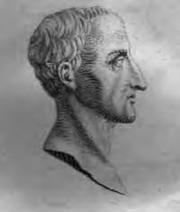
Sextus Propertius
ca. 47 BC – 15 BC
Very little information is known about Propertius outside of his own writing. His praenomen "Sextus" is mentioned by Aelius Donatus, a few manuscripts list him as "Sextus Propertius", but the rest of his name is unknown. From numerous references in his poetry it is clear he was born and raised in Umbria; modern Assisi claims for itself the honor of his birthplace. As a boy his father died and the family lost land as part of a confiscation, probably the same one which reduced Virgil's estates when Octavian alloted lands to his veterans in 41 BC. Combining this with cryptic references in Ovid implying he was younger than his contemporary Tibullus, a birthdate in the early 40s seems appropriate…
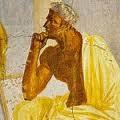
Albius Tibullus
ca. 54 BC – ca. 19 BC
Albius Tibullus (ca. 55-19 BC) was a Latin poet and writer of elegies. Little is known about his life. His first and second books of poetry are extant; many other texts attributed to Tibullus are of questionable origins. There are only a few references to him in later writers and a short Life of doubtful authority. His praenomen is not known, nor is his birthplace and his gentile name has been questioned. His status was probably that of a Roman knight (so the Life affirms); and he had inherited a considerable estate. But, like Virgil, Horace and Propertius, he seems to have lost most of it in 41 BC amongst the confiscations of Mark Antony and Octavian. (<a href=https://en.wikipedia.org/wiki…
Georg Luck
1926 – ,
Reviews
No reviews yet — be the first to write one from the Log screen.
Quotes
No quotes yet.