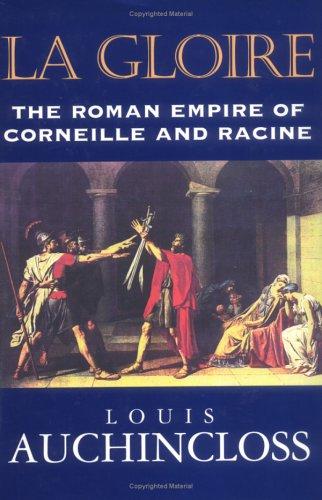
LA Gloire
1996Criticism and interpretationRomeIn literatureFrench drama, history and criticismCorneille, pierre, 1606-1684
0.0
Open LibraryFirst lines
In modern times, though perhaps starting as far back as the historian Edward Gibbon (1737-1794), there is a tendency to think of the Roman Empire as a political entity in a condition of constant decline, a decadent slave state, always overrun by barbarians it was too effete to resist, with a population whose principal diversion was watching gladiatorial combats and Christians fed to the lions.
About this book
In a charming collection of elegant essays, one of the twentieth century's leading men of letters turns his vast knowledge and worldly authority to the texts of two seventeenth-century French dramatists. Louis Auchincloss considers sixteen plays by Pierre Corneille (1606-84) and his younger theatrical rival, Jean Racine (1639-99). Musing on the ideas that informed the court of the Sun King and on what classical allusions meant to them, Auchincloss offers thoughtful readings, new translations, and a wealth of shrewd observations about French classic tragedy, passion, self-sacrifice, self-aggrandizement, and civic and military glory. Auchincloss lets the grand voices of Corneille's and Racine's heroes and heroines speak, while calling attention to details and discoveries that illumine aspects of both seventeenth-century and twentieth-century culture. He specifically considers the theme of gloire - the lofty destiny or mission that the hero (and more rarely the heroine) has set for himself and for which he would willingly sacrifice the most passionate romance, closest friendship, or dearest family ties. While gloire is more commonly associated with Corneille than with Racine, Auchincloss demonstrates that these French masters were capable of swapping predilections when it came to the Roman plays.
Themes & subjects
Criticism and interpretationRomeIn literatureFrench drama, history and criticismCorneille, pierre, 1606-1684Racine, jean, 1639-1699
First published 1996Characters & people
Setting
Rome
About the author
Louis Auchincloss
27 September 1917 – 26 January 2010
Reviews
No reviews yet — be the first to write one from the Log screen.
Quotes
No quotes yet.