fraeon
Films
BrowseTop 250
Series
TV ShowsAnimeTop 250 TVTop 100 Anime
Games
BrowseTop 100
Books
BooksMangaTop 125 BooksTop 100 Manga
For youTrendingTier ListsThe ArchiveLeaderboard
Log inSign up free
fraeon

Everything you watch, play and read — tracked, rated and remembered in one library.

Explore

  • Films
  • TV
  • Anime
  • Games
  • Books
  • Manga

Discover

  • Trending
  • Leaderboard
  • Find people
  • Lists
  • Tier lists

Company

  • Tour
  • About
  • Community guidelines
  • Privacy
  • Terms
  • Contact

© 2026 fraeon. All rights reserved. ·

Metadata from TMDB, RAWG, Jikan & Open Library. This product uses the TMDB API but is not endorsed or certified by TMDB.

Questions or ideas? mehmet@avortas.com

HomeFeedProfile
Savrola

Savrola

by Winston S. Churchill

1899RevolutionsFictionPolitical science, great britainFiction, politicalSir Winston Churchill
0.0
Open Library
Open Library

About this book

Savrola is Winston Churchill’s first major literary effort and his only full-length work of fiction. Published in the U.S. in 1899 and 1900 in the U.K., the novel’s subtitle, A Tale of the Revolution in Laurania, reflects the story’s modern political focus. Savrola contains the seeds of Churchill’s exceptional talents as a statesman, a political philosopher, and a man of literature. The ambition of Savrola to rule foreshadows Churchill’s own life-long career as the greatest democratic leader of the past century. In the novel, Churchill the thinker explores the challenges of securing democratic order and avoiding mob rule. He sketches a model of the education needed for modern statesmanship and describes the kind of rhetoric that appeals to a modern democratic people. Elements of Churchill’s literary style in the novel anticipate the greatness of his later prose works that would merit him the Nobel Prize for Literature. Laurania, a long-established republic, is subjected to the autocratic rule of President Antonio Molara, a former general who has become known as the Dictator. Savrola, the man of the multitude, leads the democratic effort to restore the political liberties of the people. When the register of eligible electors is mutilated and the popular franchise compromised, a riot breaks out and the stage is set for a fight to the death between Molara and Savrola over who will rule Laurania. General Molara enlists the assistance of his beautiful wife, Lucille, to undermine Savrola’s influence with the people. But Lucille falls in love with Savrola, who is equally moved …

Themes & subjects

RevolutionsFictionPolitical science, great britainFiction, politicalSir Winston Churchill
First published 1899

Characters & people

Setting

Laurania - a fictional Mediterranean republic

About the author
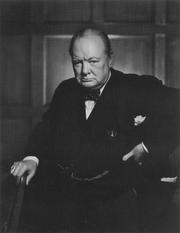
Winston S. Churchill

30 November 1874 – 24 January 1965

Sir Winston Leonard Spencer-Churchill, KG, OM, CH, TD, PC, FRS was a British politician known chiefly for his leadership of the United Kingdom during World War II. He is widely regarded as one of the great wartime leaders. He served as Prime Minister from 1940 to 1945 and again from 1951 to 1955. A noted statesman and orator, Churchill was also an officer in the British Army, a historian, writer and artist. To date, he is the only British Prime Minister to have received the Nobel Prize in Literature, and the first person to be recognised as an honorary citizen of the United States. During his life, there was also a popular American author named [Winston Churchill](https://openlibrary.org/…

Author

Winston S. Churchill

First published

1899

Pages

198

Read time

≈ 5h

Editions

57

Language

English

Publisher

CreateSpace Independent Publishing Platform

ISBN

9781472580009

Where to buy

TR
Amazon Bookshop

Reviews

No reviews yet — be the first to write one from the Log screen.

Quotes

No quotes yet.
Discussions

Similar books

Ulysses

Married people · Male friendship

Ulysses

James Joyce

1914

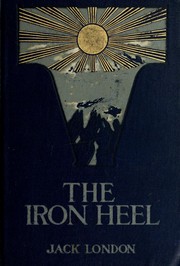
The Iron Heel

Revolutions, fiction · Oligarchy, fiction

The Iron Heel

Jack London

1907

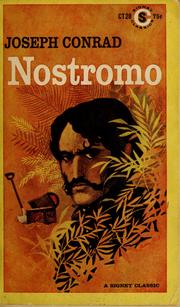
Nostromo

Fiction · Revolutions

Nostromo

Joseph Conrad

1900

It Can't Happen Here

Anti-fascist movements · Presidents

It Can't Happen Here

Sinclair Lewis

1935

State and Revolution

Political Science · Philosophy

State and Revolution

Vladimir Il’ich Lenin

1900

Soldiers of Fortune

Classic Literature · Fiction

Soldiers of Fortune

Richard Harding Davis

1897

L'Homme révolté

Good and evil · Revolutions

L'Homme révolté

Albert Camus

1951

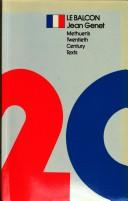
Le Balcon

Intellectual life · Continental european drama (dramatic works by one author)

Le Balcon

Jean Genet

1956

The Courts of the morning

Fiction in English · Richard Hannay (Fictitious character)

The Courts of the morning

John Buchan

1929

La rebelión de las masas

Civilization · Proletariat

La rebelión de las masas

José Ortega y Gasset

1929

L'ancien régime et la Révolution

History · Causes

L'ancien régime et la Révolution

Alexis de Tocqueville

1856

The Age of Revolution

History · Industrial revolution

The Age of Revolution

Eric Hobsbawm

1962

Пролетарская революция и ренегат Каутский

Communism · Proletariat

Пролетарская революция и ренегат Каутский

Vladimir Il’ich Lenin

1918

Public sector management

Administrative agencies · Civil service

Public sector management

Norman Flynn

1990

The eighteenth-century commonwealthman

Constitutional history · Politics and government

The eighteenth-century commonwealthman

Caroline Robbins

1959

Politics in Britain

Politics and government · Social classes

Politics in Britain

Colin Leys

1983

Political Thought and the Tudor Commonwealth

Economic policy · Politics and government

Political Thought and the Tudor Commonwealth

Paul Fideler

1992

Edmund Burke

Burke, Edmund, · 1729-1797

Edmund Burke

Frank O'Gorman

2003