0.0
Open LibraryFirst lines
Linnaeus' contemporaries were well aware that the roots of his contributions to natural history lay in something more than a rigorous empiricism and an effective taxonomy.
About this book
"Linnaeus' mature theodicy, his attempt to reconcile the suffering and evil of the world with the omnipotence and goodness of God, is presented in a condensed form in the final editions of his Systema Naturae (1758/68). In this compendium of our knowledge of the three great realms of organic nature, he outlines the significance of the sub-conscious, social awareness and theological orientation in the spiritual life of man, and indicates how fate, fortune, and Providence interrelate within his conception of the Deity." "In the Nemesis Divina this general undertaking is developed into an 'experimental theology', which is exactly analogous to Linnaeus' work in the natural sciences, in that it involves the collecting and classifying of concrete and carefully described case-studies."--BOOK JACKET.
Themes & subjects
Early works to 1800Providence and government of GodChristianity
First published 1968About the author
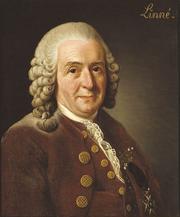
Carl Linnaeus
1707 – 1778
Swedish botanist, father of modern taxonomy. See also his son [Carolus Linnaeus the Younger](/a/OL1512828A), [Linnean Society of London](/a/OL2528631A), [Linnaean Society of New England](/a/OL2512649A), [Linnean Society of New South Wales](/a/OL2536572A), [Linnaean Society of New York](/a/OL5022033A), and [Philadelphia Linnean Society](/a/OL4787261A).
Reviews
No reviews yet — be the first to write one from the Log screen.
Quotes
No quotes yet.