fraeon
Films
BrowseTop 250
Series
TV ShowsAnimeTop 250 TVTop 100 Anime
Games
BrowseTop 100
Books
BooksMangaTop 125 BooksTop 100 Manga
For youTrendingTier ListsThe ArchiveLeaderboard
Log inSign up free
fraeon

Everything you watch, play and read — tracked, rated and remembered in one library.

Explore

  • Films
  • TV
  • Anime
  • Games
  • Books
  • Manga

Discover

  • Trending
  • Leaderboard
  • Find people
  • Lists
  • Tier lists

Company

  • Tour
  • About
  • Community guidelines
  • Privacy
  • Terms
  • Contact

© 2026 fraeon. All rights reserved. ·

Metadata from TMDB, RAWG, Jikan & Open Library. This product uses the TMDB API but is not endorsed or certified by TMDB.

Questions or ideas? mehmet@avortas.com

HomeFeedProfile
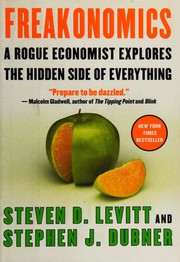
Superfreakonomics

Superfreakonomics

by Steven D. Levitt, Stephen J. Dubner

EconomicsSociological aspectsSociological aspects of EconomicsPsychological aspectsPsychological aspects of Economics
4.1
Open Library
Open Library

About this book

The New York Times bestselling Freakonomics was a worldwide sensation, selling more than four million copies in thirty-five languages and changing the way we look at the world.Steven D. Levitt and Stephen J. Dubner return with Superfreakonomics, and fans and newcomers alike will find that the freakquel is even bolder, funnier, and more surprising than the first.SuperFreakonomics challenges the way we think all over again, exploring the hidden side of everything with such questions as:How is a street prostitute like a department-store Santa?What do hurricanes, heart attacks, and highway deaths have in common?Can eating kangaroo save the planet?Levitt and Dubner mix smart thinking and great storytelling like no one else. By examining how people respond to incentives, they show the world for what it really is-good, bad, ugly, and, in the final analysis, super freaky. Freakonomics has been imitated many times over-but only now, with SuperFreakonomics, has it met its match.

Themes & subjects

EconomicsSociological aspectsSociological aspects of EconomicsPsychological aspectsPsychological aspects of EconomicsBusiness

Setting

Economics

About the authors
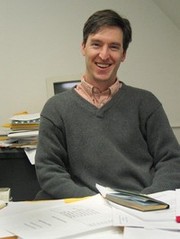
Steven D. Levitt
Steven D. Levitt

May 29, 1967

"Steven David "Steve" Levitt is a prominent American economist best known for his work on crime, in particular on the link between legalized abortion and crime rates. Winner of the 2003 John Bates Clark Medal, he is currently the Alvin H. Baum Professor of Economics at the University of Chicago, director of the Becker Center on Chicago Price Theory at the University of Chicago Graduate School of Business, and co-editor of the Journal of Political Economy published by the University of Chicago Press." - Wikipedia

Stephen J. Dubner
Stephen J. Dubner

Authors

Steven D. Levitt, Stephen J. Dubner

Pages

288

Read time

≈ 7h

Editions

25

Languages

English, Spanish, Chinese

Publisher

William Morrow

ISBN

9781554686094

Where to buy

TR
Amazon Bookshop

Reviews

No reviews yet — be the first to write one from the Log screen.

Quotes

No quotes yet.
Discussions

Similar books

La Poetica

Metaphysics · Early works to 1800

La Poetica

Aristotle

1479

Manifest der Kommunistischen Partei

Communism · Sources

Manifest der Kommunistischen Partei

Karl Marx

1848

Ἱστορίαι

genre:historiography · genre:history

Ἱστορίαι

Ἡρόδοτος

1494

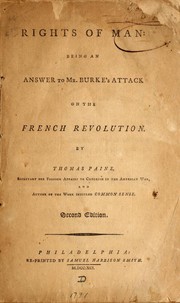
Rights of Man

History · Politics and government

Rights of Man

Thomas Paine

1791

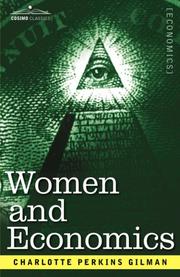
Women and economics

Economic conditions · Social and moral questions

Women and economics

Charlotte Perkins Gilman

1898

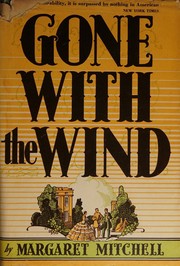
Gone With the Wind

survival · slavery

Gone With the Wind

Margaret Mitchell

1936

The Theory of the Leisure Class

Leisure class · Philosophy

The Theory of the Leisure Class

Thorstein Veblen

1899

Du contrat social

Peace · The State

Du contrat social

Jean-Jacques Rousseau

1762

The Economic Consequences of the Peace (Twentieth-Century Classics)

World War, 1914-1918 · Economic aspects

The Economic Consequences of the Peace (Twentieth-Century Classics)

John Maynard Keynes

1919

Das Kapital

Economics · Capital

Das Kapital

Karl Marx

1867

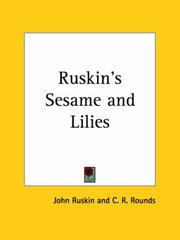
Sesame and Lilies, three lectures

Books and reading · Conduct of life

Sesame and Lilies, three lectures

John Ruskin

1800

How to live on 24 hours a day

Conduct of life · Nonfiction

How to live on 24 hours a day

Arnold Bennett

1900

Tristan und Isolde

Tristan (Legendary character) · Romances

Tristan und Isolde

Gottfried von Strassburg

1823

Le suicide

Suicide · Suicidio (Psicologia)

Le suicide

Émile Durkheim

1850

Freakonomics

Economics · Economics -- Psychological aspects

Freakonomics

Steven D. Levitt

2005

Looking out/looking in

Interpersonal communication · Textbooks

Looking out/looking in

Ronald B. Adler

1974

Emotional Intelligence

Emotions and cognition · Intellect

Emotional Intelligence

Daniel Goleman

1995

Wirtschaft und Gesellschaft

Sociology · Economics

Wirtschaft und Gesellschaft

Max Weber

1922