Plays
by Euripides
DramaTranslations into EnglishSeven against Thebes (Greek mythology)Rhesus (Legendary character)Adrastus (Greek mythology)
0.0
Open LibraryAbout this book
`the most tragic of the poets' Aristotle Euripides was one of the most popular and controversial of all Greek tragedians, and his plays are marked by an independence of thought, ingenious dramatic devices, and a subtle variety of register and mood. He is also remarkable for the prominence he gave to female characters, whether heroines of virtue or vice. In the ethically shocking Medea, the first known child-killing mother in Greek myth to perform the deed in cold blood manipulates her world in order to wreak vengeance on her treacherous husband. Hippolytus sees Phaedra's confession of her passion for her stepson herald disaster, while Electra's heroine helps her brother murder their mother in an act that mingles justice and sin. Lastly, lighter in tone, the satyr drama, Helen, is an exploration of the impossibility of certitude as brilliantly paradoxical as the three famous tragedies. This new translation does full justice to Euripides's range of tone and gift for narrative. A lucid introduction provides substantial analysis of each play, complete with vital explanations of the traditions and background to Euripides's world.
Description via Google Books
Themes & subjects
DramaTranslations into EnglishSeven against Thebes (Greek mythology)Rhesus (Legendary character)Adrastus (Greek mythology)Heracles (Greek mythology)
Characters & people
About the author
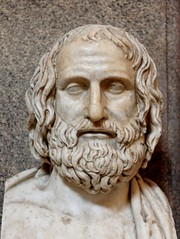
Euripides
480 BCE – 406 BCE
Euripides was the last of the three great tragedians of classical Athens (the other two being Aeschylus and Sophocles). Ancient scholars thought that Euripides had written ninety-five plays, although four of those were probably written by Critias. Eighteen or nineteen of Euripides' plays have survived complete. There has been debate about his authorship of Rhesus, largely on stylistic grounds and ignoring classical evidence that the play was his.[1] Fragments, some substantial, of most of the other plays also survive. More of his plays have survived than those of Aeschylus and Sophocles together, because of the unique nature of the Euripidean manuscript tradition. ([Source][1].) [1]…
Reviews
No reviews yet — be the first to write one from the Log screen.
Quotes
No quotes yet.