Watt
English literatureContinental european fiction (fictional works by one author)Household employeesFiction
5.0
Open LibraryAbout this book
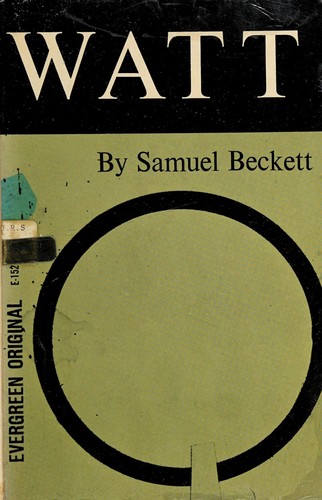
Written in Roussillon during World War Two, while Samuel Beckett was hiding from the Gestapo, Watt was first published in 1953. Beckett acknowledged that this comic novel unlike any other 'has its place in the series' - those masterpieces running from Murphy to the Trilogy, Waiting for Godot and beyond. It shares their sense of a world in crisis, their profound awareness of the paradoxes of being, and their distrust of the rational universe. Watt tells the tale of Mr Knott's servant and his attempts to get to know his master. Watt's mistake is to derive the essence of his master from the accidentals of his being, and his painstakingly logical attempts to 'know' ultimately consign him to the asylum. Itself a critique of error, Watt has previously appeared in editions that are littered with mistakes, both major and minor. The new Faber edition offers for the first time a corrected text based on a scholarly appraisal of the manuscripts and textual history.
Description via Google Books
Themes & subjects
English literatureContinental european fiction (fictional works by one author)Household employeesFiction
About the author

Samuel Beckett
13 April 1906 – 22 December 1989
Samuel Barclay Beckett was an Irish avant-garde writer, dramatist and poet, writing in English and French. Beckett's work offers a bleak outlook on human culture and both formally and philosophically became increasingly minimalist in his later career. As a student, assistant, and friend of James Joyce, Beckett is considered one of the last modernists; as an inspiration to many later writers, he is sometimes considered one of the first postmodernists. He is also considered one of the key writers in what Martin Esslin called "Theatre of the Absurd." As such, he is widely regarded as one of the most influential writers of the 20th century. Beckett was awarded the Nobel Prize in Literature…
Reviews
No reviews yet — be the first to write one from the Log screen.
Quotes
No quotes yet.