0.0
Open LibraryAbout this book
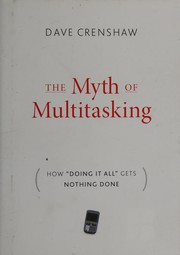
"Multitasking is all around us: the office worker interrupted by a phone call, the teenager texting while driving, the salesperson chatting while entering an order. When multitasking, the mind juggles all the many tasks we're doing this second, this hour, this week, and tries to perform them together-sometimes with great ease, sometimes with great difficulty. We don't often stop to think about how exactly we accomplish these feats of multitasking great and small. How do we switch from one task to another? What types of multitasking are disruptive, and when are they most disruptive? And ultimately, how can we take advantage of the benefits of multitasking while alleviating its negative effects in our daily lives? This book presents the theory of threaded cognition, a theory that aims to explain the multitasking mind. The theory states that multitasking behavior can be expressed as cognitive threads-independent streams of thought that weave through the mind's processing resources to produce multitasking behavior, and sometimes experience conflicts to produce multitasking interference. Grounded in the ACT-R cognitive architecture, threaded cognition incorporates computational representations and mechanisms used to simulate and predict multitasking behavior and performance. The book describes the implications of threaded cognition theory across three traditionally disparate domains: concurrent multitasking (doing multiple tasks at once), sequential multitasking (interrupting and resuming tasks), and multitask skill acquisition (learning and practicing multiple tasks). The wor…
Themes & subjects
Human multitaskingTime managementCognition
Reviews
No reviews yet — be the first to write one from the Log screen.
Quotes
No quotes yet.