fraeon
Films
BrowseTop 250
Series
TV ShowsAnimeTop 250 TVTop 100 Anime
Games
BrowseTop 100
Books
BooksMangaTop 125 BooksTop 100 Manga
For youTrendingTier ListsThe ArchiveLeaderboard
Log inSign up free
fraeon

Everything you watch, play and read — tracked, rated and remembered in one library.

Explore

  • Films
  • TV
  • Anime
  • Games
  • Books
  • Manga

Discover

  • Trending
  • Leaderboard
  • Find people
  • Lists
  • Tier lists

Company

  • Tour
  • About
  • Community guidelines
  • Privacy
  • Terms
  • Contact

© 2026 fraeon. All rights reserved. ·

Metadata from TMDB, RAWG, Jikan & Open Library. This product uses the TMDB API but is not endorsed or certified by TMDB.

Questions or ideas? mehmet@avortas.com

HomeFeedProfile

Know how

by Jason Stanley

Theory of KnowledgeKnowledge, theory of
0.0
Open Library
Open Library

About this book

"The goal of inquiry is to acquire knowledge of truths about the world. In this book, Jason Stanley argues that knowing how to do something amounts to knowing a truth about the world. When you learned how to swim, what happened is that you learned some truths about swimming. Knowledge of these truths is what gave you knowledge of how to swim. Something similar occurred with every other activity that you now know how to do, such as riding a bicycle or cooking a meal. Of course, when you learned how to swim, you didn't learn just any truth about swimming. You learned a special kind of truth about swimming, one that answers the question, 'How could you swim?' Know How develops an account of the kinds of answers to questions, knowledge of which explains skilled action. Drawing on work in epistemology, philosophy of mind, ethics, action theory, philosophy of language, linguistic semantics, and cognitive neuroscience, Stanley presents a powerful case that it is our success as inquirers that explains our capacity for skilful engagement with the world."--Publisher's website.

Themes & subjects

Theory of KnowledgeKnowledge, theory of

About the author

Jason Stanley

source: https://www.penguinrandomhouse.com/authors/2179035/jason-stanley/ . Jason Stanley is a philosopher, and the Bissell-Heyd-Associates Chair in American Studies at the Munk School of Global Affairs & Public Policy at the University of Toronto. He is also a Distinguished Professor at the Kyiv School of Economics. Stanley is the author of seven books, including How Propaganda Works and Erasing History: How Fascists Rewrite the Past to Control the Future. A member of The Justice Collaboratory at Yale Law School, he writes frequently about authoritarianism, democracy, propaganda, and free speech for The Guardian, The New York Times, Project Syndicate, and other publications. How Fascism W…

Author

Jason Stanley

Pages

214

Read time

≈ 5h

Editions

2

Language

English

Publisher

Oxford University Press

ISBN

9780199683161

Where to buy

TR
Amazon Bookshop

Reviews

No reviews yet — be the first to write one from the Log screen.

Quotes

No quotes yet.

Discussions

Across media

The same story in other forms.
the film

Know How

the series

Know How...

Similar books

Συμπόσιον

Love · Early works to 1800

Συμπόσιον

Plato

1559

The Problems of Philosophy

Philosophy · Introductions

The Problems of Philosophy

Bertrand Russell

1900

Summa Theologica

Anthropology · Attributes

Summa Theologica

Thomas Aquinas

1467

Essay concerning human understanding

Theory of Knowledge · Early works to 1800

Essay concerning human understanding

John Locke

1689

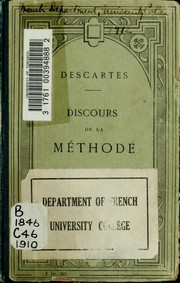
Discours de la méthode

Methodology · Science

Discours de la méthode

René Descartes

1644

Θεαίτητος

Theory of Knowledge · Ancient Philosophy

Θεαίτητος

Πλάτων

1861

Philosophical essays concerning human understanding

Theory of Knowledge · Ethics

Philosophical essays concerning human understanding

David Hume

1900

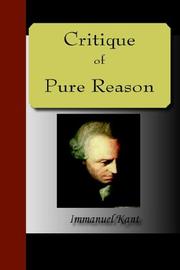
Kritik der reinen Vernunft

Reason · Causation

Kritik der reinen Vernunft

Immanuel Kant

1781

A System of Logic, Ratiocinative and Inductive

Science · Methodology

A System of Logic, Ratiocinative and Inductive

John Stuart Mill

1843

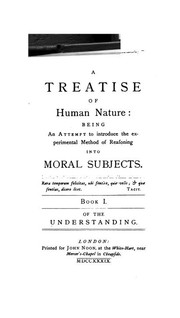
A treatise of human nature

Philosophy · English Philosophy

A treatise of human nature

David Hume

1739

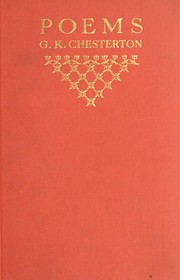
Poems

Theory of Knowledge · English Detective and mystery stories

Poems

Gilbert Keith Chesterton

1891

Die Welt als Wille und Vorstellung

Philosophy · Will

Die Welt als Wille und Vorstellung

Arthur Schopenhauer

1819

Time and free will

Consciousness · Free will and determinism

Time and free will

Henri Bergson

1889

Pluralistic Universe

Classic Literature · Fiction

Pluralistic Universe

William James

1908

Ethica

Correspondence · Philosophers

Ethica

Benedictus de Spinoza

1883

The advancement of learning

Science · Methodology

The advancement of learning

Francis Bacon

1605

Essays on the intellectual powers of man

Intellect · Intelligence

Essays on the intellectual powers of man

James Walker

1785

Χαρμίδης

Spurious and doubtful works · Philosophy

Χαρμίδης

Plato

1977