

0.0
Open LibraryAbout the authors
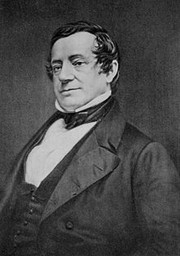
Washington Irving
3 April 1783 – 28 November 1859
American author, essayist, biographer and historian of the early 19th century. He was best known for his short stories "The Legend of Sleepy Hollow" and "Rip Van Winkle", both of which appear in his book "The Sketch Book of Geoffrey Crayon, Gent" (<a href=http://en.wikipedia.org/wiki/Washington_Irving>Wikipedia</a>).
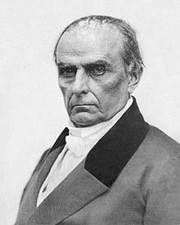
Daniel Webster
18 Jan 1782 – 24 Oct 1852
Daniel Webster (January 18, 1782 – October 24, 1852) was an American lawyer and statesman who represented New Hampshire and Massachusetts in the U.S. Congress and served as the 14th and 19th U.S. secretary of state under presidents William Henry Harrison, John Tyler, and Millard Fillmore.
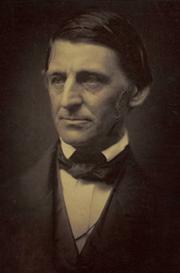
Ralph Waldo Emerson
25 May 1803 – 27 April 1882
Ralph Waldo Emerson was an American philosopher, essayist, and poet, best remembered for leading the Transcendentalist movement of the mid-19th century. His teachings directly influenced the growing New Thought movement of the mid-1800s. He was seen as a champion of individualism and a prescient critic of the countervailing pressures of society. Emerson gradually moved away from the religious and social beliefs of his contemporaries, formulating and expressing the philosophy of Transcendentalism in his 1836 essay, Nature. As a result of this ground-breaking work he gave a speech entitled The American Scholar in 1837, which Oliver Wendell Holmes, Sr. considered to be America's "Intellectua…
Reviews
No reviews yet — be the first to write one from the Log screen.
Quotes
No quotes yet.