4.0
Open LibraryAbout this book
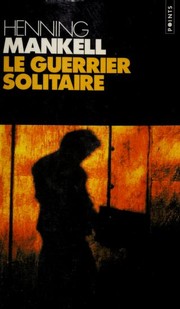
Quand en janvier 2014, Henning Mankell apprend qu'il est atteint d'un cancer grave, il entame un "journal de bord" qu'il tiendra durant les 5 mois de traitement jusqu'à l'annonce d'une rémission. Le résultat : un texte hybride foisonnant, constitué de 67 fragments qui fait souvent référence - mais pas seulement - aux moments où sa vie a basculé, ce qu'il appelle "le sable mouvant", et où surmontant la tentation du gouffre, il a organisé sa résistance, suivi de la chimiothérapie, jusqu'à l'annonce du répit salvateur. Il s'agit plutôt d'un déferlement prolifique, libre et ordonné à la fois, dont le fil conducteur est Mankell lui-même - sa perception du monde, de la vie, de la mort, de sa propre histoire et de celle de l'humanité, une perception transformée par l'épreuve, au fil de ces quelques mois.
Themes & subjects
BiographiesSwedish AuthorsBiographyCancerRécits personnelsSweden, biography
Characters & people
Setting
20th century21st century
About the author
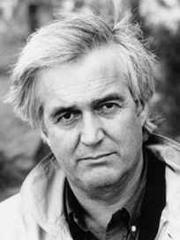
Henning Mankell
3 February 1948 – 2015-10-05
Henning Mankell was born in Stockholm, Sweden, the son of a judge. He grew up in the towns of Sveg and Borås. His grandfather, also called Henning Mankell (1868–1930), was a well-known composer. At the age of 20, Mankell was the assistant director at the Riks Theater in Stockholm, and he was also writing. In the 1970s he moved to Norway, where he lived with a woman who was a member of the Maoist Communist Labour Party, although he never officially joined the Party. He moved to Africa and lived in several African countries, and in 1985 he founded the Avenida Theater in Maputo, Mozambique, where he continues to spend about half of every year. In 1997 he began his most well-known series of nove…
Reviews
No reviews yet — be the first to write one from the Log screen.
Quotes
No quotes yet.