Learning Matters
by Wendy Leeds-Hurwitz, Peter Sloat Hoff
pedagogyhigher educationstudent-centered learningfaculty developmentteaching excellence
0.0
Open LibraryAbout this book
Higher education in the United States of America, considered by many to set a worldwide standard for broad access and high levels of excellence, has for many decades seen massive changes in its approaches to teaching and learning. Redesigning and transforming the way colleges and universities teach their students has been likened to reconstructing an airplane while it remains aloft. More than 4,000 US colleges and universities have met the challenge by analyzing major changes in student populations and introducing new instructional techniques that recognize the primacy of learning over teaching. This seemingly innocent but powerful transformation, acknowledging that teaching only matters as a means to the real end - learning - is powering a pedagogical revolution. The Learning Revolution in US higher education began when World War II veterans flooded university classrooms, soon to be followed by their children, the American «Baby Boom.» Overwhelming numbers of new students from new kinds of backgrounds flooded colleges and universities, forcing professors to rethink how they went about teaching these new generations. To handle the numbers, many new universities were created, and many established centers for teaching excellence to help professors adapt to new populations with new techniques. In the 1990s, higher education further professionalized the teaching craft via the Scholarship of Teaching and Learning. Research into how students learn and how to help them learn took its place alongside traditional academic research. Aided by a wave of new technologies, teaching cente…
Themes & subjects
pedagogyhigher educationstudent-centered learningfaculty developmentteaching excellenceSoTL
Setting
United States
About the author
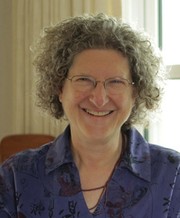
Wendy Leeds-Hurwitz
Wendy Leeds-Hurwitz is Director of the Center for Intercultural Dialogue, supported by the Council for Communication Associations, Professor Emerita of Communication at the University of Wisconsin-Parkside, and Associate Faculty at Royal Roads University, Victoria, BC, Canada. She has been Chercheur invité at the Ecole normale supérieure de Lyon, France, Senior Fellow at the Collegium de Lyon Institut d'études avancées, Fulbright Senior Specialist at the Instituto Politécnico de Coimbra, Portugal; and Harron Family Endowed Chair of Communication at Villanova University, Pennsylvania. She has served UNESCO as an expert on intercultural dialogue, presented at the World Forum on Intercultural D…
Reviews
No reviews yet — be the first to write one from the Log screen.
Quotes
No quotes yet.