Persian Fire
by Tom Holland
genre:historyAchaemenid EmpireSalamis, Battle of (Greece : 480 B.C.) fast (OCoLC)fst01103757Salamis, Battle of, Greece, 480 B.C.Persian Wars (Greece : 500-449 B.C.) fast (OCoLC)fst01353977
4.0
Open LibraryAbout this book
In 480 B.C.E., Xerxes, the King of Persia, led an invasion of mainland Greece. Its success should have been a formality. For seventy years, victory--rapid, spectacular victory--had seemed the birthright of the Persian Empire. They had swept across the Near East, shattering ancient kingdoms, storming famous cities, putting together an empire which stretched from India to the shores of the Aegean. Xerxes ruled as the most powerful man on the planet. Yet somehow, astonishingly, against the largest expeditionary force ever assembled, the Greeks managed to hold out. Had the Greeks been defeated in the epochal naval battle at Salamis, not only would the West have lost its first struggle for independence and survival, but it is unlikely that there would ever have been such an entity as the West at all. Historian Holland combines scholarly rigor with novelistic depth and finds extraordinary parallels between the ancient world and our own.--From publisher description.
Themes & subjects
genre:historyAchaemenid EmpireSalamis, Battle of (Greece : 480 B.C.) fast (OCoLC)fst01103757Salamis, Battle of, Greece, 480 B.C.Persian Wars (Greece : 500-449 B.C.) fast (OCoLC)fst01353977History
Setting
Achaemenid EmpireGreecePersiaPersian Wars, 500-449 B.C.
About the author

Tom Holland
05 January 1968
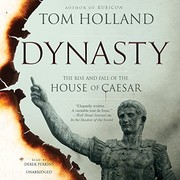
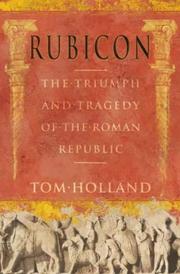
Tom Holland is an award-winning historian, biographer and broadcaster. He is the author of Rubicon: The Triumph and the Tragedy of the Roman Republic, which won the Hessell-Tiltman Prize for History and was shortlisted for the Samuel Johnson Prize; Persian Fire his history of the Graeco-Persian wars, won the Anglo-Hellenic League’s Runciman Award in 2006; Millennium: The End of the World and the Forging of Christendom, a panoramic account of the two centuries on either side of the apocalyptic year 1000; In the Shadow of the Sword, which covers the collapse of Roman and Persian power in the Near East, and the emergence of Islam; and Dynasty, a portrait of Rome's first imperial dynasty.
Reviews
No reviews yet — be the first to write one from the Log screen.
Quotes
No quotes yet.