fraeon
Films
BrowseTop 250
Series
TV ShowsAnimeTop 250 TVTop 100 Anime
Games
BrowseTop 100
Books
BooksMangaTop 125 BooksTop 100 Manga
For youTrendingTier ListsThe ArchiveLeaderboard
Log inSign up free
fraeon

Everything you watch, play and read — tracked, rated and remembered in one library.

Explore

  • Films
  • TV
  • Anime
  • Games
  • Books
  • Manga

Discover

  • Trending
  • Leaderboard
  • Find people
  • Lists
  • Tier lists

Company

  • Tour
  • About
  • Community guidelines
  • Privacy
  • Terms
  • Contact

© 2026 fraeon. All rights reserved. ·

Metadata from TMDB, RAWG, Jikan & Open Library. This product uses the TMDB API but is not endorsed or certified by TMDB.

Questions or ideas? mehmet@avortas.com

HomeFeedProfile
Computing attitude and affect in text

Computing attitude and affect in text

by James G. Shanahan, Janyce M. Wiebe

LexicologyComputational linguisticsPattern recognition systemsInformation storage and retrieval systemsLinguistic models
0.0
Open Library
Open Library

About this book

Human Language Technology (HLT) and Natural Language Processing (NLP) systems have typically focused on the “factual” aspect of content analysis. Other aspects, including pragmatics, opinion, and style, have received much less attention. However, to achieve an adequate understanding of a text, these aspects cannot be ignored. The chapters in this book address the aspect of subjective opinion, which includes identifying different points of view, identifying different emotive dimensions, and classifying text by opinion. Various conceptual models and computational methods are presented. The models explored in this book include the following: distinguishing attitudes from simple factual assertions; distinguishing between the author’s reports from reports of other people’s opinions; and distinguishing between explicitly and implicitly stated attitudes. In addition, many applications are described that promise to benefit from the ability to understand attitudes and affect, including indexing and retrieval of documents by opinion; automatic question answering about opinions; analysis of sentiment in the media and in discussion groups about consumer products, political issues, etc. ; brand and reputation management; discovering and predicting consumer and voting trends; analyzing client discourse in therapy and counseling; determining relations between scientific texts by finding reasons for citations; generating more appropriate texts and making agents more believable; and creating writers’ aids. The studies reported here are carried out on different languages such as English, Fre…

Themes & subjects

LexicologyComputational linguisticsPattern recognition systemsInformation storage and retrieval systemsLinguistic modelsData processing

Authors

James G. Shanahan, Janyce M. Wiebe

Pages

360

Read time

≈ 9h

Editions

4

Language

English

Publisher

Springer

ISBN

9781402041020

Where to buy

TR
Amazon Bookshop

Reviews

No reviews yet — be the first to write one from the Log screen.

Quotes

No quotes yet.
Discussions

Similar books

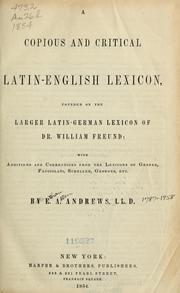
A copious and critical Latin-English lexicon, founded on the larger Latin-German lexicon of W. Freund

Dictionaries · Latin language

A copious and critical Latin-English lexicon, founded on the larger Latin-German lexicon of W. Freund

Ethan Allen Andrews

1850

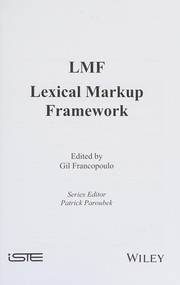
LMF Lexical Markup Framework

Natural language processing (computer science) · Natural language processing (Computer science)

LMF Lexical Markup Framework

Gil Francopoulo

2013

Lexical priming

Comparative and general Grammar · Creativity (Linguistics)

Lexical priming

Michael Hoey

2005

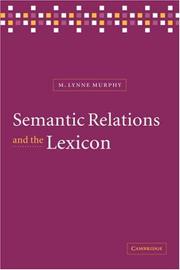
Semantic Relations and the Lexicon

Semantics · Lexicology

Semantic Relations and the Lexicon

M. Lynne Murphy

2003

Crazy English

Lexicology · Humor

Crazy English

Richard Lederer

1989

Lexical Processing and Second Language Acquisition

Second language acquisition · Lexicology

Lexical Processing and Second Language Acquisition

Natasha Tokowicz

2014

Lexicology and corpus linguistics

Linguistics · Lexicology

Lexicology and corpus linguistics

Wolfgang Teubert

2004

Formulaic language and the lexicon

Aphasia · Language acquisition

Formulaic language and the lexicon

Alison Wray

2002

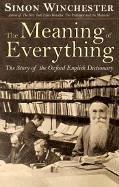
The meaning of everything

Lexicographers · English language

The meaning of everything

Simon Winchester

2003

You Know What I Mean?

Language Arts · Nonfiction

You Know What I Mean?

Ruth Wajnryb

2008

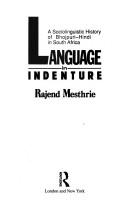
Language in indenture

Bhojpuri language · Dialects

Language in indenture

Rajend Mesthrie

1991

Roots

Blacks · History

Roots

Alex Haley

1861

Computational Linguistics and Intelligent Text Processing

Data Mining and Knowledge Discovery · Database management

Computational Linguistics and Intelligent Text Processing

Alexander Gelbukh

2003

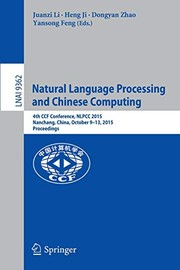
Natural Language Processing and Chinese Computing

Natural language processing (computer science) · Computational linguistics

Natural Language Processing and Chinese Computing

Juanzi Li

2013

Text, speech, and dialogue

Natural language processing (Computer science) · Congresses

Text, speech, and dialogue

Petr Sojka

1999

Statistical Language and Speech Processing

Computational linguistics · Speech processing systems

Statistical Language and Speech Processing

Carlos Martín-Vide

2013

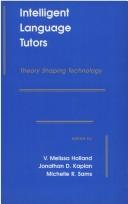
Intelligent language tutors

Computer-assisted instruction · Computational linguistics

Intelligent language tutors

V. Melissa Holland

1995

Chinese Computational Linguistics and Natural Language Processing Based on Naturally Annotated Big Data

Chinese language, data processing · Natural language processing (computer science)

Chinese Computational Linguistics and Natural Language Processing Based on Naturally Annotated Big Data

Maosong Sun

2013