About this book
"I am stockpiling antibiotics for the apocalypse, even as I await the blossoming of paperwhites on the windowsill in the kitchen," Anne Lamott admits at the beginning of Almost Everything. Despair and uncertainty surround us: in the headlines, in our families, and in ourselves. But even when life is at its bleakest--when everything makes us feel, as Lamott puts it, "doomed, stunned, exhausted, and overly caffeinated" --the seeds of rejuvenation are at hand. "All truth is paradox," Lamott writes, "and this turns out to be a reason for hope. If you arrive at a place in life that is miserable, it will change." That is the time when we must pledge, she says, "not to give up, but to do what Wendell Barry wrote: 'Be joyful, though you have considered all the facts.'" Lamott calls for all of us to rediscover the nuggets of hope and wisdom that are buried in us that will make tomorrow better than today. Divided into short chapters that explore life's essential truths as she sees them-- "Almost everything will work again if you unplug it for a few minutes. Including you" --Lamott pinpoints these moments of insight and shines an encouraging light forward. Candid and funny, insightful and caring, Almost Everything is the book of hope we need and that only Anne Lamott can write.
Themes & subjects
SpiritualityLifeReligious aspectsHope
About the author
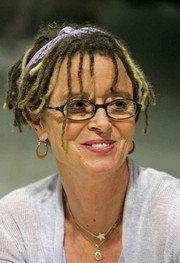
Anne Lamott
10 April 1954
A novelist and writer of non-fiction, Anne Lamott was born in San Francisco in 1954. She wrote for the newspaper at Goucher College for the two years she attended. She wrote her first novel, *Hard Laughter* for her father after he was diagnosed with brain cancer. Howard Freeman's term "particularism" is aptly applied to her narrative nonfiction. Lamott draws on her own life and experiences in her writing, covering topics such as alcoholism, depression, being a single mother, Christianity, and the intersection between them.
Reviews
No reviews yet — be the first to write one from the Log screen.
Quotes
No quotes yet.