Consciousness explained
3.6
Open LibraryAbout this book
This book revises the traditional view of consciousness by claiming that Cartesianism and Descartes' dualism of mind and body should be replaced with theories from the realms of neuroscience, psychology and artificial intelligence. What people think of as the stream of consciousness is not a single, unified sequence, the author argues, but "multiple drafts" of reality composed by a computer-like "virtual machine". Dennett considers how consciousness could have evolved in human beings and confronts the classic mysteries of consciousness: the nature of introspection, the self or ego and its relation to thoughts and sensations, and the level of consciousness of non-human creatures.
Themes & subjects
Mind and bodyConsciousnessConscienceLeib-Seele-ProblemBewustzijnMente y cuerpo
First published 1991About the author
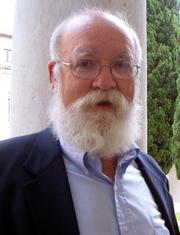
Daniel C. Dennett
28 March 1942 – 19 April 2024
Daniel Clement Dennett III was an American philosopher, writer, and cognitive scientist whose research centered on the philosophy of mind, philosophy of science, and philosophy of biology, particularly as those fields relate to evolutionary biology and cognitive science. Dennett was the co-director of the Center for Cognitive Studies and the Austin B. Fletcher Professor of Philosophy at Tufts University in Massachusetts. Dennett was a vocal atheist and secularist, a member of the Secular Coalition for America advisory board, and a member of the Committee for Skeptical Inquiry, as well as an outspoken supporter of the Brights movement. Dennett was referred to as one of the "Four Horsemen o…
Reviews
No reviews yet — be the first to write one from the Log screen.
Quotes
No quotes yet.