

About the authors
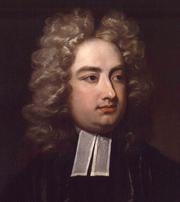
Jonathan Swift
30 November 1667 – 19 October 1745
Jonathan Swift was an Irish satirist, essayist, political pamphleteer (first for the Whigs, then for the Tories), poet and cleric who became Dean of St. Patrick's, Dublin. He is remembered for works such as Gulliver's Travels, A Modest Proposal, A Journal to Stella, Drapier's Letters, The Battle of the Books, An Argument Against Abolishing Christianity, and A Tale of a Tub. Source and more information: https://en.wikipedia.org/wiki/Jonathan_Swift
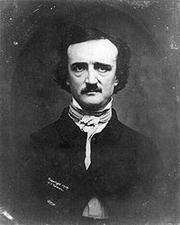
Edgar Allan Poe
19 January 1809 – 7 October 1849
Edgar Allan Poe was an American writer, poet, editor and literary critic, considered part of the American Romantic Movement. Best known for his tales of mystery and the macabre, Poe was one of the earliest American practitioners of the short story and is considered the inventor of the detective-fiction genre. He is further credited with contributing to the emerging genre of science fiction.[1] He was the first well-known American writer to try to earn a living through writing alone, resulting in a financially difficult life and career.[2] Source and more information: https://en.wikipedia.org/wiki/Edgar_Allan_Poe

Jules Verne
8 February 1828 – 24 March 1905
Jules Verne was a French author who helped pioneer the science-fiction genre. He is best known for his novels A Journey to the Centre of the Earth (1864), From the Earth to the Moon (1865), Twenty Thousand Leagues Under the Sea (1869–1870), Around the World in Eighty Days (1873) and The Mysterious Island (1875). Verne wrote about space, air, and underwater travel before navigable aircraft and practical submarines were invented, and before any means of space travel had been devised. Consequently he is often referred to as the "Father of science fiction", along with H. G. Wells. ([Source][1].) Also as of 2023, Jules Verne is regarded as the second most translated author in the world. ([…
Reviews
No reviews yet — be the first to write one from the Log screen.
Quotes
No quotes yet.