About this book
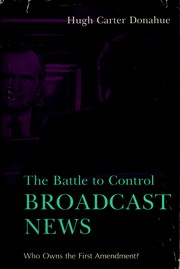
"In the early years before the civil rights era, American broadcasting reflected the interests of the white mainstream, especially in the South. Today, the face of local television throughout the nation mirrors the diversity of the local populations." "The impetus for change began in 1964, when the Office of Communication of the United Church of Christ and two black Mississippians, Aaron Henry and Reverend R.L.T. Smith, challenged the broadcasting license of WLBT, an NBC affiliate in Jackson, Mississippi. The lawsuit was the catalyst that would bring reform to American broadcasting." "This station in a city whose population was 40 percent black was charged with failure to give fair coverage to civil rights and to integration issues that were dominating the news.^ Among offenses cited by the black population were the cancellation of a network interview with the civil rights attorney Thurgood Marshall and editorializing against the integration of the University of Mississippi." "However, muscle, money, and a powerhouse Washington, D.C. law firm were on the side of the station. Despite the charges, the Federal Communications Commission twice renewed the station's license. Twice the challenges won appeals to the federal courts. Warren Burger, then a federal appeals court judge, wrote decisions on both challenges. The first ordered the FCC to allow public participation in its proceedings. The second, an unprecedented move, took the license from WLBT." "This well-told, deeply researched history of the case covers the legal battles over their more than fifteen years and reports t…
Themes & subjects
Fairness doctrine (Broadcasting)Trials, litigationCivil rightsLaw and legislationUnited States. Federal Communications CommissionTelevision broadcasting
First published 2004Setting
United States20th century
Reviews
No reviews yet — be the first to write one from the Log screen.
Quotes
No quotes yet.