Tree and Leaf
4.2
Open LibraryAbout this book
Fairy-stories are not just for children, as anyone who has read Tolkien will know. In his essay 'On Fairy-Stories', Tolkien discusses the nature of fairy-tales and fantasy and rescues the genre from those who would relegate it to juvenilia. This is aptly and elegantly illustrated in the haunting short story, 'Leaf by Niggle', which recounts the story of the artist, Niggle, who has 'a long journey' to make and is seen as an allegory of Tolkien 's life. The poem Mythopoeia relates an argument between two unforgettable characters as they discuss the making of myths. Written in the same period when 'The Lord of the Rings' was beginning to take shape, these two works show Tolkien's mastery and understanding of the art of sub-creation, the power to give fantasy the inner consistency of reality. Tree and Leaf is an eclectic, amusing, provocative and entertaining collection of works which reveals the diversity of J.R.R. Tolkien's imagination, the depth of his knowledge of English history, and the breadth of his talent as a creator of fantastic fiction.
Themes & subjects
History and criticismFairy talesEnglish Folk literatureTalesFairy tales, history and criticism
First published 1964Characters & people
About the author
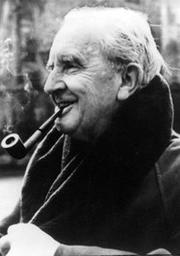
J.R.R. Tolkien
3 January 1892 – 2 September 1973
John Ronald Reuel Tolkien (1892-1973) was a major scholar of the English language, specialising in Old and Middle English. Twice Professor of Anglo-Saxon (Old English) at the University of Oxford, he also wrote a number of stories, including most famously The Hobbit (1937) and The Lord of the Rings (1954-1955), which are set in a pre-historic era in an invented version of the world which he called by the Middle English name of Middle-earth. This was peopled by Men (and women), Elves, Dwarves, Trolls, Orcs (or Goblins) and of course Hobbits. He has regularly been condemned by the Eng. Lit. establishment, with honourable exceptions, but loved by literally millions of readers worldwide. In t…
Reviews
No reviews yet — be the first to write one from the Log screen.
Quotes
No quotes yet.