fraeon
Films
BrowseTop 250
Series
TV ShowsAnimeTop 250 TVTop 100 Anime
Games
BrowseTop 100
Books
BooksMangaTop 125 BooksTop 100 Manga
For youTrendingTier ListsThe ArchiveLeaderboard
Log inSign up free
fraeon

Everything you watch, play and read — tracked, rated and remembered in one library.

Explore

  • Films
  • TV
  • Anime
  • Games
  • Books
  • Manga

Discover

  • Trending
  • Leaderboard
  • Find people
  • Lists
  • Tier lists

Company

  • Tour
  • About
  • Community guidelines
  • Privacy
  • Terms
  • Contact

© 2026 fraeon. All rights reserved. ·

Metadata from TMDB, RAWG, Jikan & Open Library. This product uses the TMDB API but is not endorsed or certified by TMDB.

Questions or ideas? mehmet@avortas.com

HomeFeedProfile
Uncle Tungsten

Uncle Tungsten

by Oliver Sacks

2001KnowledgeNeurologistsBiographiesEnfance et jeunesseNeurologues
4.4
Open Library
Open Library

About this book

"From his earliest days, Oliver Sacks - the distinguished neurologist who is also one of the most remarkable storytellers of our time - was irresistibly drawn to understanding the natural world. Born into a large family of doctors, metallurgists, chemists, physicists, and teachers, his curiosity was encouraged and abetted by aunts, uncles, parents, and older brothers. But soon after his sixth birthday, the Second World War broke out and he was evacuated from London - as were hundreds of thousands of children - to escape the bombing. Exiled to a school that rivaled Dickens's grimmest, fed on a steady diet of turnips and beetroots, tormented by a sadistic headmaster, and allowed home only once in four years, he felt desolate and abandoned.". "When he returned to London in 1943 at the age of ten, he was a changed, withdrawn boy, one who desperately needed order to make sense of his life. He was sustained by his secret passions: for numbers, for metals, and for finding patterns in the world around him. Under the tutelage of his "chemical" uncle, Uncle Tungsten, Sacks began to experiment with "the stinks and bangs that almost define a first entry into chemistry": tossing sodium off a bridge to see it take fire in the water below; producing billowing clouds of noxious smelling chemicals in his home lab. As his interests spread to investigations of batteries and bulbs, vacuum tubes and photography, he discovered his first great scientific heroes - men and women whose genius lay in understanding the hidden order of things and disclosing the forces that sustain and support …

Themes & subjects

KnowledgeNeurologistsBiographiesEnfance et jeunesseNeurologuesChemistry
First published 2001

Characters & people

Setting

EnglandAngleterre

About the author
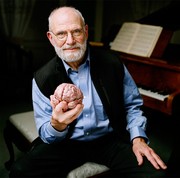
Oliver Sacks
Oliver Sacks

9 July 1933 – 2015-08-30

Oliver Sacks, M.D. was a physician, a best-selling author, and a professor of neurology at the NYU School of Medicine. The New York Times has referred to him as “the poet laureate of medicine.” He is best known for his collections of neurological case histories, including The Man who Mistook his Wife for a Hat, Musicophilia: Tales of Music and the Brain and An Anthropologist on Mars. Awakenings, his book about a group of patients who had survived the great encephalitis lethargica epidemic of the early twentieth century, inspired the 1990 Academy Award-nominated feature film starring Robert De Niro and Robin Williams. Dr. Sacks was a frequent contributor to the New Yorker and the New Yo…

Author

Oliver Sacks

First published

2001

Pages

352

Read time

≈ 9h

Editions

24

Languages

English, German, Hebrew

Publisher

Picador

ISBN

9781529011517

Where to buy

TR
Amazon Bookshop

Reviews

No reviews yet — be the first to write one from the Log screen.

Quotes

No quotes yet.
Discussions

Similar books

Metamorfosi

Poetry · Mythology

Metamorfosi

Ovid

1474

Metamorphoses

Poetry · Classical Mythology

Metamorphoses

Ovid

1479

Inferno

Poetry · Hell

Inferno

Dante Alighieri

1767

Burya

Librettos · Operas

Burya

William Shakespeare

1789

Essay concerning human understanding

Theory of Knowledge · Early works to 1800

Essay concerning human understanding

John Locke

1689

Kritik der reinen Vernunft

Reason · Causation

Kritik der reinen Vernunft

Immanuel Kant

1781

The master key system in twenty-four parts with questionnaire and glossary

New Thought · Self-actualization (Psychology)

The master key system in twenty-four parts with questionnaire and glossary

Charles F. Haanel

1919

A treatise of human nature

Philosophy · English Philosophy

A treatise of human nature

David Hume

1739

Goethe's Werke

Translations into English · Knowledge

Goethe's Werke

Johann Wolfgang von Goethe

1800

NASA/DoD aerospace knowledge diffusion research project

Aeronautical engineering · Aeronautics

NASA/DoD aerospace knowledge diffusion research project

Thomas E. Pinelli

1990

Leonardo

Exhibitions · Knowledge

Leonardo

Leonardo da Vinci

1946

Os Maias

Fiction · Portuguese fiction

Os Maias

Eça de Queiroz

1900

The advancement of learning

Science · Methodology

The advancement of learning

Francis Bacon

1605

The Logic of Scientific Discovery

Science · Methodology

The Logic of Scientific Discovery

Karl Popper

1935

The Echo Maker

award:national_book_award=2006 · Neurologists

The Echo Maker

Richard Powers

2006

A Leg to Stand on

Biography · Health

A Leg to Stand on

Oliver Sacks

1984

On the Move

Neurologists · Biography

On the Move

Oliver Sacks

2015

Medicine and Modernism

HEALTH & FITNESS · Diseases

Medicine and Modernism

L. S. Jacyna

2008