fraeon
Films
BrowseTop 250
Series
TV ShowsAnimeTop 250 TVTop 100 Anime
Games
BrowseTop 100
Books
BooksMangaTop 125 BooksTop 100 Manga
For youTrendingTier ListsThe ArchiveLeaderboard
Log inSign up free
fraeon

Everything you watch, play and read — tracked, rated and remembered in one library.

Explore

  • Films
  • TV
  • Anime
  • Games
  • Books
  • Manga

Discover

  • Trending
  • Leaderboard
  • Find people
  • Lists
  • Tier lists

Company

  • Tour
  • About
  • Community guidelines
  • Privacy
  • Terms
  • Contact

© 2026 fraeon. All rights reserved. ·

Metadata from TMDB, RAWG, Jikan & Open Library. This product uses the TMDB API but is not endorsed or certified by TMDB.

Questions or ideas? mehmet@avortas.com

HomeFeedProfile
Language and human behavior

Language and human behavior

by Derek Bickerton

1995Human evolutionLanguage and languagesPsycholinguisticsTaalgeneseLanguage
0.0
Open Library
Open Library

About this book

According to Bickerton, the behavioral sciences have failed to give an adequate account of human nature at least partly because of the conjunction and mutual reinforcement of two widespread beliefs: that language is simply a means of communication and that human intelligence is the result of the rapid growth and unusual size of human brains. Bickerton argues that each of the properties distinguishing human intelligence and consciousness from that of other animals can be shown to derive straightforwardly from properties of language. In essence, language arose as a representational system, not a means of communication or a skill, and not a product of culture but an evolutionary adaptation. The author stresses the necessity of viewing intelligence in evolutionary terms, seeing it not as problem solving but as a way of maintaining homeostasis - the preservation of those conditions most favorable to an organism, the optimal achievable conditions for survival and well-being. The term protolanguage is used to describe the stringing together of symbols that prehuman hominids employed. "It did not allow them to turn today's imagination into tomorrow's fact. But it is just this power to transform imagination into fact that distinguishes human behavior from that of our ancestral species, and indeed from that of all other species. It is exactly what enables us to change our behavior, or invent vast ranges of new behavior, practically overnight, with no concomitant genetic changes." Language and Human Behavior should be of interest to anyone in the behavioral and evolutionary scienc…

Themes & subjects

Human evolutionLanguage and languagesPsycholinguisticsTaalgeneseLanguageBiological Evolution
First published 1995

Author

Derek Bickerton

First published

1995

Pages

180

Read time

≈ 5h

Editions

4

Language

English

Publisher

University of Washington Press

ISBN

9780295979779

Where to buy

TR
Amazon Bookshop

Around the web

New York Times review

Reviews

No reviews yet — be the first to write one from the Log screen.

Quotes

No quotes yet.
Discussions

Similar books

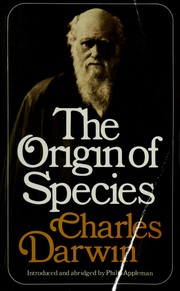
On the origin of species by means of natural selection

Evolution · Evolution (Biology)

On the origin of species by means of natural selection

Charles Darwin

1859

Childhood’s End

Human-alien encounters · Fiction

Childhood’s End

Arthur C. Clarke

1952

The Human Zoo

Human behavior · Science

The Human Zoo

Desmond Morris

1705

The descent of man

Evolution · Evolution (Biology)

The descent of man

Charles Darwin

1871

The descent of man, and selection in relation to sex

Human beings · Origin

The descent of man, and selection in relation to sex

Charles Darwin

1870

What is life? The physical aspect of the living cell

Life (Biology) · Biological aspects

What is life? The physical aspect of the living cell

Erwin Schrödinger

1944

Saving the World and Other Extreme Sports

Fiction · Genetic engineering

Saving the World and Other Extreme Sports

James Patterson

1998

The Ascent of Man

Human evolution · Human beings

The Ascent of Man

Henry Drummond

1894

The Evolution of Man

Anatomy, Comparative · Comparative Anatomy

The Evolution of Man

Ernst Haeckel

1876

World Prehistory and Archaeology

Archaeology · Prehistoric Anthropology

World Prehistory and Archaeology

Michael Chazan

2007

The Phenomenon of Man

Paleoantropologie · Evolution

The Phenomenon of Man

Pierre Teilhard de Chardin

1955

The Third Chimpanzee

Human evolution · Social evolution

The Third Chimpanzee

Jared Diamond

1991

Evidence as to man's place in nature

Animal nature · Apes

Evidence as to man's place in nature

Thomas Henry Huxley

1863

Oliver Twist

Bildungsromans · Boys

Oliver Twist

Charles Dickens

1822

Tractatus logico-philosophicus

Analysis (Philosophy) · Language

Tractatus logico-philosophicus

Ludwig Wittgenstein

1921

Sein und Zeit

Espace et temps · Ontologie

Sein und Zeit

Martin Heidegger

1927

Language

Psycholinguistics · Philosophy

Language

Edward Sapir

1921

Kokoro

Translations into English · Fiction

Kokoro

夏目漱石

1914