The great terror
4.0
Open LibraryFirst lines
The Great Terror of 1936 to 1938 did not come out of the blue.
The Great Terror of 1936 to 1938 did not come out of the blue.
About this book
The definitive work on Stalin's purges, the author's The Great Terror was universally acclaimed when it first appeared in 1968. It was "hailed as the only scrupulous, nonpartisan, and adequate book on the subject". And in recent years it has received equally high praise in the Soviet Union, where it is now considered the authority on the period, and has been serialized in Neva, one of their leading periodicals. Of course, when the author wrote the original volume two decades ago, he relied heavily on unofficial sources. Now, with the advent of glasnost, an avalanche of new material is available, and he has mined this enormous cache to write a substantially new edition of his classic work. It is remarkable how many of the most disturbing conclusions have born up under the light of fresh evidence. But the author has added enormously to the detail, including hitherto secret information on the three great "Moscow Trials," on the fate of the executed generals, on the methods of obtaining confessions, on the purge of writers and other members of the intelligentsia, on life in the labor camps, and many other key matters. Both a leading Sovietologist and a highly respected poet, the author blends research with prose, providing not only an authoritative account of Stalin's purges, but also a compelling chronicle of one of this century's most tragic events. A timely revision of a book long out of print, this is the updated version of the author's original work.
Themes & subjects
Politics and governmentTerrorismPurgesPolitical purgesHistoryRussia
First published 1968Characters & people
Setting
Soviet UnionRussia1936-195320th century
About the author
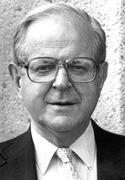
Robert Conquest
15 July 1917 – 5 August 2015
Robert Conquest was born in Malvern, Worcestershire, the son of an American businessman and a Norwegian mother. He was educated at Winchester College, the University of Grenoble, Oxford University, where he was an exhibitioner in modern history and took his bachelor's and master's degrees in Philosophy, Politics and Economics, and his doctorate in Soviet history. In 1937, after a year studying at the University of Grenoble and traveling in Bulgaria, he returned to Oxford and joined the Communist Party. When When World War II began, he became an intelligence officer in the Light Infantry. In 1940, he married Joan Watkins, with whom he had two sons. In 1944, while posted to Bulgaria as a liais…
Reviews
No reviews yet — be the first to write one from the Log screen.
Quotes
No quotes yet.