Arrow Pointing Nowhere
3.0
Open LibraryAbout this book
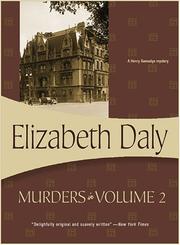
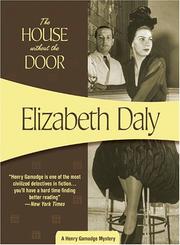
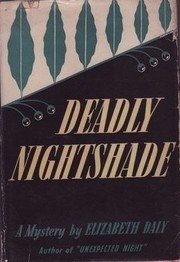
Take one grand house, stuff it with staff, and make it home to several generations. If they send their sons to Oxford and occasionally knock each other off, you’ve got a country-house mystery, that classic of English crime fiction. But if the boys are at Yale, odds are that you’re reading a New York mansion mystery — a genre largely invented by Elizabeth Daly. Henry Gamadge, Daly’s gentleman-sleuth, does make occasional jaunts to the country, but now he’s back on the Upper East Side, receiving missives suggesting that all is not right at the elegant Fenway manse. But first he must find out who the messages are from. > The arrival of the first anonymous note convinced Henry Gamadge it was essential he get himself invited there to tea. But once inside, he found only a cozy family group. A young fellow called Craddock watched over poor half-witted Alden. Lovely Belle sat serenely in her invalid chair, attended by the competent Miss Grove. The somewhat sardonic Miss Caroline made charming small talk with her wealthy father and elderly cousin Mott. Even Gamadge couldn't guess which of them had just slipped him a second secret message-or how important a clue it would become in a most diabolical case of murder.
Themes & subjects
FictionHenry Gamadge (Fictitious character)Large type booksBibliographersBook collectorsMurder
First published 1944Characters & people
Setting
New York (N.Y.)1940s
About the author
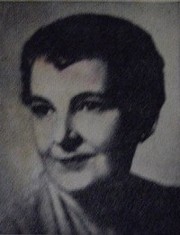
Elizabeth Daly
15 October 1878 – 1967
Elizabeth Daly was born in New York City, the child of a justice on the Supreme Court of New York County and his wife. As a child, she loved games and puzzles, and she went on to become an avid reader of the crime fiction. She graduated from Bryn Mawr College and then earned an M.A. degree from Columbia University. In 1940, at the age of sixty-two, Daly took up writing and published her first novel. She went on to become one of the most prolific crime writers of the 1940s, publishing an additional fifteen mystery novels. All of her books follow the adventures of the same main character, Henry Gamadge. She received an Edgar Award for her body of work. Agatha Christie, whom she greatly admired…
Reviews
No reviews yet — be the first to write one from the Log screen.
Quotes
No quotes yet.