Sync
Self-organizing systemsSynchronisationSynchronizationSystèmes auto-organisésBiological rhythms
4.4
Open LibraryAbout this book
The tendency to synchronize may be the most mysterious and pervasive drive in all of nature. It has intrigued some of the most brilliant minds of the 20th century, including Albert Einstein, Richard Feynman, Norbert Wiener, Brian Josephson, and Arthur Winfree. At once elegant and riveting, Sync tells the story of the dawn of a new science. Steven Strogatz, a leading mathematician in the fields of chaos and complexity theory, explains how enormous systems can synchronize themselves, from the electrons in a superconductor to the pacemaker cells in our hearts. He shows that although these phenomena might seem unrelated on the surface, at a deeper level there is a connection, forged by the unifying power of mathematics.
Themes & subjects
Self-organizing systemsSynchronisationSynchronizationSystèmes auto-organisésBiological rhythmsCycles
About the author
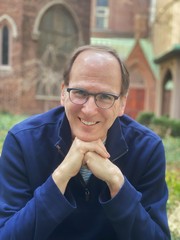
Steven H. Strogatz
13 August 1959
Steven Henry Strogatz is an American mathematician and the Jacob Gould Schurman Professor of Applied Mathematics at Cornell University. He is known for his work on nonlinear systems, including contributions to the study of synchronization in dynamical systems, for his research in a variety of areas of applied mathematics, including mathematical biology and complex network theory, and for his outreach work in the public communication of mathematics. *--Wikipedia* *Photo Attribution:* Strogatz, CC BY-SA 4.0 <https://creativecommons.org/licenses/by-sa/4.0>, via Wikimedia Commons
Reviews
No reviews yet — be the first to write one from the Log screen.
Quotes
No quotes yet.