About the authors
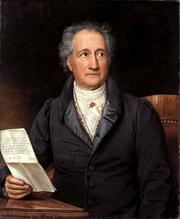
Johann Wolfgang von Goethe
28 August 1749 – 22 March 1832
Johann Wolfgang von Goethe was a German writer and polymath. Goethe's works span the fields of poetry, drama, literature, theology, philosophy, pantheism, and science. His magnum opus, lauded as one of the peaks of world literature, is the two-part drama Faust. Goethe's other well-known literary works include his numerous poems, the Bildungsroman Wilhelm Meister's Apprenticeship and the epistolary novel The Sorrows of Young Werther. <sup>[1][1]</sup> [1]: https://en.wikipedia.org/wiki/Johann_Wolfgang_von_Goethe
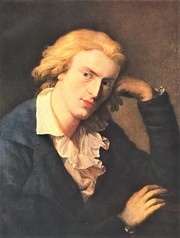
Friedrich Schiller
10 November 1759 – 9 May 1805
Johann Christoph Friedrich von Schiller was a German physician, playwright, poet, and philosopher. During the last seventeen years of his life (1788–1805), Schiller developed a productive, if complicated, friendship with the already famous and influential Johann Wolfgang von Goethe. They frequently discussed issues concerning aesthetics, and Schiller encouraged Goethe to finish works that he had left as sketches. This relationship and these discussions led to a period now referred to as Weimar Classicism. They also worked together on Xenien, a collection of short satirical poems in which both Schiller and Goethe challenge opponents of their philosophical vision.

Heinrich Heine
13 December 1797 – 7 February 1856
German poet, journalist, essayist, and literary critic
Reviews
No reviews yet — be the first to write one from the Log screen.
Quotes
No quotes yet.
Discussions
Nothing similar catalogued yet.