fraeon
Films
BrowseTop 250
Series
TV ShowsAnimeTop 250 TVTop 100 Anime
Games
BrowseTop 100
Books
BooksMangaTop 125 BooksTop 100 Manga
For youTrendingTier ListsThe ArchiveLeaderboard
Log inSign up free
fraeon

Everything you watch, play and read — tracked, rated and remembered in one library.

Explore

  • Films
  • TV
  • Anime
  • Games
  • Books
  • Manga

Discover

  • Trending
  • Leaderboard
  • Find people
  • Lists
  • Tier lists

Company

  • Tour
  • About
  • Community guidelines
  • Privacy
  • Terms
  • Contact

© 2026 fraeon. All rights reserved. ·

Metadata from TMDB, RAWG, Jikan & Open Library. This product uses the TMDB API but is not endorsed or certified by TMDB.

Questions or ideas? mehmet@avortas.com

HomeFeedProfile
Communitas

Communitas

by Paul Goodman, Percival Goodman

City planningUtopiasBouwkunstStädtebauUrbanisme
0.0
Open Library
Open Library

About this book

The Goodman brothers see a "community plan" not as a layout of streets and houses, but as the external form of the activity going on. "It is more like a choreography of society in motion and in rest, an arrangement for society to live out its habits and ideals and do its work, directing itself or being directed." They examine in turn the three main types of plans which have emerged in the last hundred years, grouping them into three classes: the green belt, industrial plans, and integrated plans. The Goodmans turn then to their own, and they arrive at three completely different community formulas, with communities for efficient consumption, the elimination of the difference between production and consumption, and planned security with minimum regulation. The authors enjoy themselves working out the architectural implications of their double economy--the "production center" and minimal settlements of the subsistence economy. By the nature of their approach, they are forced to stray out of the field of town-planning into that of economics, with mixed results. However, all their suggestions release a speculative faculty in the reader's brain, and that may be the best approach to forward the building their idealized communities.

Themes & subjects

City planningUtopiasBouwkunstStädtebauUrbanismeStedenbouw

About the author
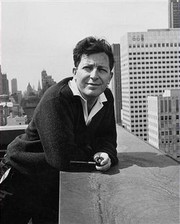
Paul Goodman
Paul Goodman

9 September 1911 – 2 August 1972

Paul Goodman (September 9, 1911 – August 2, 1972) was an American sociologist, poet, writer, anarchist, and public intellectual. Goodman is now mainly remembered as the author of Growing Up Absurd (1960) and an activist on the pacifist Left in the 1960s and an inspiration to that era's student movement. He is less remembered as a co-founder of Gestalt Therapy in the 1940s and '50s. [Wikipedia, October 2011]

Authors

Paul Goodman, Percival Goodman

Pages

248

Read time

≈ 6h

Editions

11

Language

English

Publisher

Vintage Books

ISBN

9784000161244

Where to buy

TR
Amazon Bookshop

Reviews

No reviews yet — be the first to write one from the Log screen.

Quotes

No quotes yet.
Discussions

Similar books

The Trumpet-Major, and Robert His Brother

Fiction · History

The Trumpet-Major, and Robert His Brother

Thomas Hardy

1880

Balthazar

Fiction · Illegal arms transfers in fiction

Balthazar

Lawrence Durrell

1957

Le Corbusier

Correspondence · Sketch-books

Le Corbusier

Le Corbusier

1938

The Second World War, Vol. I

World War, 1939-1945 · Causes

The Second World War, Vol. I

Winston S. Churchill

1948

The Death and Life of Great American Cities

City planning · Urban renewal

The Death and Life of Great American Cities

Jane Jacobs

1961

Victor Pasmore

Catalogs · Exhibitions

Victor Pasmore

Victor Pasmore

1945

The City of Ember (The First Book of Ember)

Fiction · Juvenile Fiction

The City of Ember (The First Book of Ember)

Jeanne DuPrau

1998

Cities in the Wilderness

Cities and towns · History

Cities in the Wilderness

Carl Bridenbaugh

1938

Georgian London

Buildings, structures · Buildings

Georgian London

John N. Summerson

1945

Alvar Aalto

Wooden Building · Architecture

Alvar Aalto

Alvar Aalto

1963

Gulliver's Travels

YA · Young adult

Gulliver's Travels

Jonathan Swift

1726

The Prince

Political science, early works to 1800 · Machiavel, Nicolas, 1469-1527. Prince

The Prince

Niccolò Machiavelli

1515

πολιτεία

Political science · Early works to 1800

πολιτεία

Plato

1554

Brave New World

Utopias · Brainwashing

Brave New World

Aldous Huxley

1932

Herland

Utopias · Fiction

Herland

Charlotte Perkins Gilman

1915

The Iron Heel

Revolutions, fiction · Oligarchy, fiction

The Iron Heel

Jack London

1907

Flatland

Fourth dimension · Fiction, general

Flatland

Edwin Abbott Abbott

1884

The Blithedale Romance

Fiction · Communal living

The Blithedale Romance

Nathaniel Hawthorne

1852