fraeon
Films
BrowseTop 250
Series
TV ShowsAnimeTop 250 TVTop 100 Anime
Games
BrowseTop 100
Books
BooksMangaTop 125 BooksTop 100 Manga
For youTrendingTier ListsThe ArchiveLeaderboard
Log inSign up free
fraeon

Everything you watch, play and read — tracked, rated and remembered in one library.

Explore

  • Films
  • TV
  • Anime
  • Games
  • Books
  • Manga

Discover

  • Trending
  • Leaderboard
  • Find people
  • Lists
  • Tier lists

Company

  • Tour
  • About
  • Community guidelines
  • Privacy
  • Terms
  • Contact

© 2026 fraeon. All rights reserved. ·

Metadata from TMDB, RAWG, Jikan & Open Library. This product uses the TMDB API but is not endorsed or certified by TMDB.

Questions or ideas? mehmet@avortas.com

HomeFeedProfile
The Human Body

The Human Body

by Isaac Asimov

ScienceBiologyHuman anatomyPhysiologyPopular works
3.7
Open Library
Open Library

About this book

"In writing a book about the human body there is the great advantage that all the readers know what a human body is." Who but Isaac Asimov would begin a serious textbook in such a jovial way? Sketching first the biological order of the evolutionary process until he reaches its apogee, man, he establishes the place of homo sapens in Nature's scheme. Then, limb by limb, organ by organ, occasionally cell by cell, he describes man internally and externally in terms of his chemical and structural nature. Throughout, technical terminology is followed by an informal phonetic breakdown and etymological identification. By contrasting man's posture with that of various animals, Asimov clearly and explains the origin of various aches, pains, and susceptibilities such as slipped lines, fallen and attributing these to the difference between bipedality and . Impacted wisdom teeth, hiccups and other common afflictions are also explained. There is an unusually lucid and sympathetic discussion of the circumstances of human procreation. Asimov is now working on a companion volume on the brain, nervous system, and sensory organs, treated only in passing here. This widely-read science fiction author (I Robot, of Steel The Martian Way, and many others), is an Associate Professor of Biochemistry at Boston University School of Medicine. This is his ninth book on biological subjects; he also writes on mathematics and philology. - Kirkus Review.

Themes & subjects

ScienceBiologyHuman anatomyPhysiologyPopular worksHuman physiology

About the author
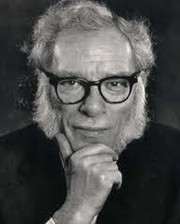
Isaac Asimov
Isaac Asimov

2 January 1920 – 6 April 1992

Asimov was born sometime between October 4, 1919 and January 2, 1920 in Petrovichi in Smolensk Oblast, RSFSR (now Russia), the son of a Jewish family of millers. Although his exact date of birth is uncertain, Asimov himself celebrated it on January 2. His family emigrated to Brooklyn, New York and opened a candy store when he was three years old. He taught himself to read at the age of five. He began reading the science fiction pulp magazines that his family's store carried. Around the age of eleven, he began to write his own stories, and by age nineteen, he was selling them to the science fiction magazines. He graduated from Columbia University in 1939. He married Gertrude Blugerman in 1…

Author

Isaac Asimov

Pages

320

Read time

≈ 8h

Editions

24

Languages

English, French

Publisher

Signet

ISBN

9780395073506

Where to buy

TR
Amazon Bookshop

Reviews

No reviews yet — be the first to write one from the Log screen.

Quotes

No quotes yet.
Discussions

Across media

The same story in other forms.

The Human Body

the film

The Human Body

the series

The Human Body

Similar books

Romeo and Juliet

Classical Literature · British and irish drama (dramatic works by one author)

Romeo and Juliet

William Shakespeare

1597

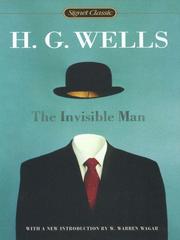
The Invisible Man

Ciencia-ficción · Classic Literature

The Invisible Man

H. G. Wells

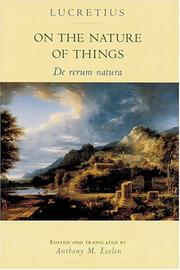
De rerum natura

Latin Didactic poetry · Ancient Philosophy

De rerum natura

Titus Lucretius Carus

1486

Le Tour du Monde en Quatre-Vingts Jours

Viajes alrededor del mundo · Translations into Gujarati

Le Tour du Monde en Quatre-Vingts Jours

Jules Verne

1872

Two years before the mast

Alert (Brig : 1843-1862) · Large-type books

Two years before the mast

Richard Henry Dana

1000

Houghton Mifflin Science California

Science · Study and teaching (Elementary)

Houghton Mifflin Science California

Houghton Mifflin Company Staff

2006

The Island of Dr. Moreau

Islands · Survival after airplane accidents, shipwrecks

The Island of Dr. Moreau

H. G. Wells

1896

Ἱστορίαι

genre:historiography · genre:history

Ἱστορίαι

Ἡρόδοτος

1494

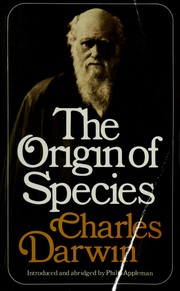
On the origin of species by means of natural selection

Evolution · Evolution (Biology)

On the origin of species by means of natural selection

Charles Darwin

1859

Houghton Mifflin Science Leveled Readers

Science · Juvenile literature

Houghton Mifflin Science Leveled Readers

Houghton Mifflin Company Staff

2005

[William Wheeler Hubbell, authorized to apply for patents.]

Administration of Justice · Agricultural machinery

[William Wheeler Hubbell, authorized to apply for patents.]

United States. Congress. Senate. Committee on Patents

1858

Advances in Heterocyclic Chemistry

Heterocyclic chemistry · Textbooks

Advances in Heterocyclic Chemistry

Alan R. Katritzky

1963

The principall navigations, voiages, and discoveries of the English nations

Voyages and travel · Discovery and exploration

The principall navigations, voiages, and discoveries of the English nations

Richard Hakluyt

1589

Principles of Anatomy and Physiology

Anatomie humaine · Anatomy

Principles of Anatomy and Physiology

Gerard J. Tortora

1975

Histoire naturelle

Natural history · Early works to 1800

Histoire naturelle

Georges-Louis Leclerc, comte de Buffon

1749

International Review of Cell and Molecular Biology

Molecular biology · Cytology

International Review of Cell and Molecular Biology

Kwang W. Jeon

2008

Le Deuxième Sexe

Women · Sex

Le Deuxième Sexe

Simone de Beauvoir

1949

Introduction to genetic analysis

Genetics · Molecular genetics

Introduction to genetic analysis

Anthony J. F. Griffiths

1993