The street
0.0
Open LibraryAbout this book
The Street is a novel published in 1946 by African-American writer Ann Petry . Set in World War II era Harlem, it centers on the life of Lutie Johnson. Petry's novel is a commentary on the social injustices that confronted her character, Lutie Johnson, as a single black mother in this time period. Lutie is confronted by racism, sexism, and classism on a daily basis in her pursuit of the American dream for herself and her son, Bub. Lutie fully subscribes to the belief that if she follows the adages of Benjamin Franklin by working hard and saving wisely, she will be able to achieve the dream of being financially independent and move from the tenement in which she lives on 116th Street. Franklin is embodied in the text through the character Junto, named after Franklin's secret organization of the same name. It is Junto, through his secret manipulations to possess Lutie sexually, who ultimately leads Lutie to murder Junto's henchman, Boots. Junto represents Petry's deep disillusionment with the cultural myth of the American dream. https://en.wikipedia.org/wiki/The_Street_(novel)
Themes & subjects
African American womenFictionMothers and sonsFiction, generalNew york (n.y.), fictionAfrican americans, fiction
First published 1969Characters & people
Setting
Harlem (New York, N.Y.)Harlem1940's20th century
About the author
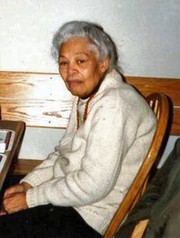
Ann Lane Petry
1908 – 28 Apr 1997
Ann Lane was born on October 12, 1908 in Old Saybrook, Connecticut as the youngest of three daughters to Peter Clark Lane and Bertha James Lane in Old Saybrook, Connecticut. Her parents belonged to the black minority of the small town. Her father was a pharmacist and her mother was a shop owner, chiropodist, and hairdresser. Ann and her sister were raised "in the classic New England tradition: a study in efficiency, thrift, and utility (…) They were filled with ambitions that they might not have entertained had they lived in a city along with thousands of poor blacks stuck in demeaning jobs." On February 22, 1938, she married George D. Petry of New Iberia, Louisiana, which brought Petry t…
Reviews
No reviews yet — be the first to write one from the Log screen.
Quotes
No quotes yet.