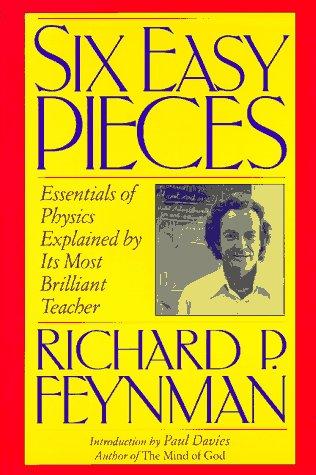
Six Easy Pieces
by Richard Phillips Feynman, Paul Davies
PhysicsFísicaObras de divulgaciónNatuurkundeLong Now Manual for Civilization
3.7
Open LibraryAbout this book
"It was Feynman's outrageous and scintillating method of teaching that earned him legendary status among students and professors of physics. From 1961 to 1963, Feynman delivered a series of lectures at the California Institute of Technology that revolutionized the teaching of physics around the world. 'Six Not-So-Easy Pieces', taken from these famous 'Lectures on Physics' represent some the most stimulating material from the series. In these classic lessons, Feynman introduces the general reader to the following topics: atoms, basic physics, energy, gravitation, quantum mechanics, and the relationship of physics to other topics..."--P. [4] of cover.
Themes & subjects
PhysicsFísicaObras de divulgaciónNatuurkundeLong Now Manual for Civilization
About the authors
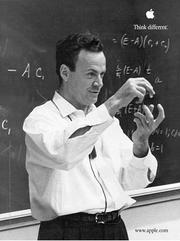
Richard Phillips Feynman
1918 – 1988
Richard Phillips Feynman was an American theoretical physicist known for his work in the path integral formulation of quantum mechanics, the theory of quantum electrodynamics, and the physics of the superfluidity of supercooled liquid helium, as well as in particle physics for which he proposed the parton model. For his contributions to the development of quantum electrodynamics, Feynman, jointly with Julian Schwinger and Sin-Itiro Tomonaga, received the Nobel Prize in Physics in 1965. - Wikipedia
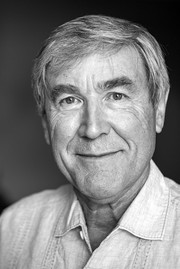
Paul Davies
22 Apr 1946 – ).
Paul Davies is a theoretical physicist. Davies has worked for much of his career in astrophysics and cosmology, with emphasis on the origin and early stages of the universe, the quantum properties of black holes and the nature of time. He is interested in the nature and origin of life – including extraterrestrial life – beyond Earth, and in complex systems generally.-faculty profile
Reviews
No reviews yet — be the first to write one from the Log screen.
Quotes
No quotes yet.