fraeon
Films
BrowseTop 250
Series
TV ShowsAnimeTop 250 TVTop 100 Anime
Games
BrowseTop 100
Books
BooksMangaTop 125 BooksTop 100 Manga
For youTrendingTier ListsThe ArchiveLeaderboard
Log inSign up free
fraeon

Everything you watch, play and read — tracked, rated and remembered in one library.

Explore

  • Films
  • TV
  • Anime
  • Games
  • Books
  • Manga

Discover

  • Trending
  • Leaderboard
  • Find people
  • Lists
  • Tier lists

Company

  • Tour
  • About
  • Community guidelines
  • Privacy
  • Terms
  • Contact

© 2026 fraeon. All rights reserved. ·

Metadata from TMDB, RAWG, Jikan & Open Library. This product uses the TMDB API but is not endorsed or certified by TMDB.

Questions or ideas? mehmet@avortas.com

HomeFeedProfile
While dangers gather

While dangers gather

by William G. Howell

Executive powerGovernment policyLegislative powerTerrorismWar and emergency powers
0.0
Open Library
Open Library

About this book

Nearly five hundred times in the past century, American presidents have deployed the nation's military abroad, on missions ranging from embassy evacuations to full-scale wars. The question of whether Congress has effectively limited the president's power to do so has generally met with a resounding "no." In "While Dangers Gather," William Howell and Jon Pevehouse reach a very different conclusion. The authors--one an American politics scholar, the other an international relations scholar--provide the most comprehensive and compelling evidence to date on Congress's influence on presidential war powers. Their findings have profound implications for contemporary debates about war, presidential power, and Congress's constitutional obligations. While devoting special attention to the 2003 invasion of Iraq, this book systematically analyzes the last half-century of U.S. military policy. Among its conclusions: Presidents are systematically less likely to exercise military force when their partisan opponents retain control of Congress. The partisan composition of Congress, however, matters most for proposed deployments that are larger in size and directed at less strategically important locales. Moreover, congressional influence is often achieved not through bold legislative action but through public posturing--engaging the media, raising public concerns, and stirring domestic and international doubt about the United States' resolve to see a fight through to the end.

Themes & subjects

Executive powerGovernment policyLegislative powerTerrorismWar and emergency powersTerrorism, government policy

Setting

United States

About the author

William G. Howell
William G. Howell

William Howell, an associate professor in the Harris School of Public Policy at the University of Chicago, has written widely on separation-of-powers issues and American political institutions, especially the presidency. His recent research examines how domestic political institutions constrain the president's ability to exercise military force abroad. Before joining the Harris School, he taught in the government department at Harvard University and the political science department at the University of Wisconsin. In 2000, he received a Ph.D. in political science from Stanford University.

Author

William G. Howell

Pages

360

Read time

≈ 9h

Editions

2

Language

English

Publisher

Princeton University Press

ISBN

9780691125152

Where to buy

TR
Amazon Bookshop

Reviews

No reviews yet — be the first to write one from the Log screen.

Quotes

No quotes yet.
Discussions

Similar books

The Virginia Papers on the Presidency

Presidents, united states · United states, politics and government

The Virginia Papers on the Presidency

Kenneth W. Thompson

1981

Congressional government

United States · United States. Congress

Congressional government

Woodrow Wilson

1885

Staatsrecht I

Problems, exercises, etc · Legislative power

Staatsrecht I

Christoph Degenhart

1984

The French Constitution

Constitutional law · Constitutions

The French Constitution

France

1791

Power

Executive power · Political science

Power

Bertrand Russell

1938

Divide and Conquer

Politics and government · Traitors

Divide and Conquer

Tom Clancy

2000

Decision-making in the White House

Presidents · Decision-making

Decision-making in the White House

Theodore C. Sorensen

1963

With no regrets

Authors, India · Authors, Indic

With no regrets

Krishna Nehru Hutheesing

1943

Line-item veto

Appropriations and expenditures · Budget

Line-item veto

United States. Congress. Senate. Committee on the Judiciary. Subcommittee on the Constitution.

1984

Presidential power

Executive power · Politics and government

Presidential power

Richard E. Neustadt

1960

Abstracts · Abuse of rights

Tax administration

United States. General Accounting Office

1986

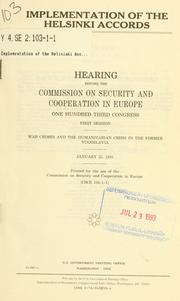
Implementation of the Helsinki accords

Admission of nonimmigrants · African cooperation

Implementation of the Helsinki accords

United States. Congress. Commission on Security and Cooperation in Europe

1982

Accounting · Address correction service

U.S. Postal Service

United States. General Accounting Office

1987

NASA/DoD aerospace knowledge diffusion research project

Aeronautical engineering · Aeronautics

NASA/DoD aerospace knowledge diffusion research project

Thomas E. Pinelli

1990

Accidents · Appropriations and expenditures

Nuclear waste

United States. General Accounting Office

1900

Aeronautics in police work · Agricultural development projects

Drug control

United States. General Accounting Office

1990

American Economic assistance · United States

Foreign assistance

United States. General Accounting Office

1989

Resolution Trust Corporation (U.S.) · Evaluation

Resolution Trust Corporation

United States. General Accounting Office

1990