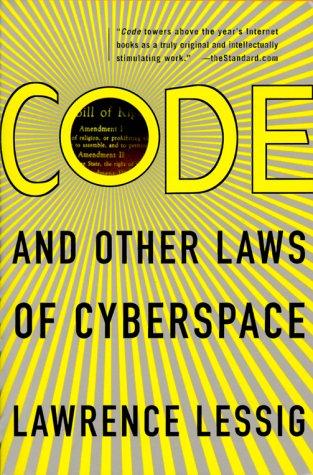
Code
Law and legislationCyberspaceSocial aspectsSocial aspects of CyberspaceInformation superhighway
4.0
Open LibraryAbout this book
Although the book is named Code and Other Laws of Cyberspace, Lessig uses this theme sparingly. It is a fairly simple concept: since cyberspace is entirely human-made, there are no natural laws to determine its architecture. While we tend to assume that what is in cyberspace is a given, in fact everything there is a construction based on decisions made by people. What we can and can't do there is governed by the underlying code of all of the programs that make up the Internet, which both permit and restrict. So while the libertarians among us rail against the idea of government, our freedoms in cyberspace are being determined by an invisible structure that is every bit as restricting as any laws that can come out of a legislature, legitimate or not. Even more important, this invisible code has been written by people we did not elect and who have no formal obligations to us, such as the members of the Internet Engineering Task Force (IETF) or the more recently-developed Internet Corporation for Assigned Names and Numbers (ICANN). It follows that what we will be able to do in the future will be determined by code that will be written tomorrow, and we should be thinking about who will determine what this code will be. [from http://kcoyle.net/lessig.html]
Themes & subjects
Law and legislationCyberspaceSocial aspectsSocial aspects of CyberspaceInformation superhighwayComputer networks
Setting
United States1990-1998
About the author
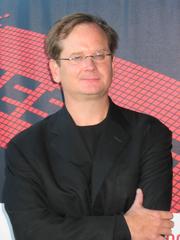
Lawrence Lessig
3 June 1961
Lawrence "Larry" Lessig is an American academic and political activist. He is best known as a proponent of reduced legal restrictions on copyright, trademark, and radio frequency spectrum, particularly in technology applications. He is a director of the Edmond J. Safra Foundation Center for Ethics at Harvard University and a professor of law at Harvard Law School. Prior to rejoining Harvard, he was a professor of law at Stanford Law School and founder of its Center for Internet and Society. Lessig is a founding board member of Creative Commons, a board member of the Software Freedom Law Center and a former board member of the Electronic Frontier Foundation.
Reviews
No reviews yet — be the first to write one from the Log screen.
Quotes
No quotes yet.