Мертвые души
by Nikolaĭ Vasilʹevich Gogolʹ
Criticism and interpretationFictionFiction in SpanishSocial life and customsSwindlers and swindling
4.7
Open LibraryAbout this book
Dead Souls is a socially critical black comedy. Set in Russia before the emancipation of serfs in 1861, the "dead souls" are dead serfs still being counted by landowners as property, as well as referring to the landowners' morality. Through surreal and often dark comedy, Gogol criticizes Russian society after the Napoleonic Wars. He intended to also offer solutions to the problems he satirized, but died before he ever completed the second part of what was intended to be a trilogy. The work famously ends mid-sentence.
Themes & subjects
Criticism and interpretationFictionFiction in SpanishSocial life and customsSwindlers and swindlingContinental european fiction (fictional works by one author)
Characters & people
Setting
Russia
About the author
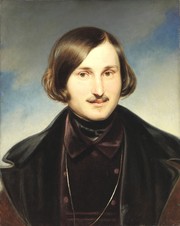
Nikolaĭ Vasilʹevich Gogolʹ
31 March 1809 – 4 March 1852
Nikolai Vasilievich Gogol (Russian: Николай Васильевич Гоголь; Ukrainian: Микола Васильович Гоголь) (31 March [O.S. 19 March] 1809 – 4 March [O.S. 21 February] 1852) was a Ukrainian-born Russian novelist, humourist, and dramatist He is considered the father of modern Russian realism. His early works, such as Evenings on a Farm Near Dikanka, were heavily influenced by his Ukrainian upbringing and identity. His more mature writing satirised the corrupt bureaucracy of the Russian Empire, leading to his exile. On his return, he immersed himself in the Orthodox Church. The novels *Taras Bul'ba* (1835; 1842 [revised edition]) and *Dead Souls* (1842), the play *The Inspector-General* (1836, 1842…
Reviews
No reviews yet — be the first to write one from the Log screen.
Quotes
No quotes yet.