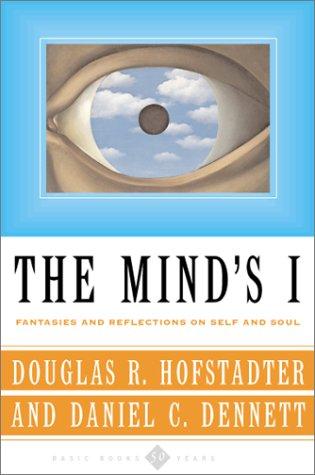
The Mind's I
by Douglas R. Hofstadter, Daniel C. Dennett
Self (Philosophy)Literary collectionsZelfConsciousnessSoul
4.7
Open LibraryAbout this book
With contributions from Jorge Luis Borges, Richard Dawkins, John Searle, and Robert Nozick, The Mind's I explores the meaning of self and consciousness through the perspectives of literature, artificial intelligence, psychology, and other disciplines. In selections that range from fiction to scientific speculations about thinking machines, artificial intelligence, and the nature of the brain, Hofstadter and Dennett present a variety of conflicting visions of the self and the soul as explored through the writings of some of the twentieth century's most renowned thinkers.
Themes & subjects
Self (Philosophy)Literary collectionsZelfConsciousnessSoulAddresses, essays, lectures
About the authors

Douglas R. Hofstadter
15 February 1945
Douglas Hofstadter is an American scholar of cognitive science, physics, and comparative literature whose research includes concepts such as the sense of self in relation to the external world, consciousness, analogy-making, artistic creation, literary translation, and discovery in mathematics and physics. His 1979 book *Gödel, Escher, Bach: An Eternal Golden Braid* won both the Pulitzer Prize for general nonfiction and a National Book Award for Science. His 2007 book *I Am a Strange Loop* won the *Los Angeles Times* Book Prize for Science and Technology.—*Wikipedia* 2021-03-03
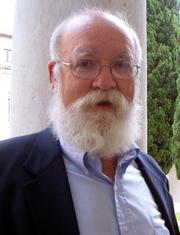
Daniel C. Dennett
28 March 1942 – 19 April 2024
Daniel Clement Dennett III was an American philosopher, writer, and cognitive scientist whose research centered on the philosophy of mind, philosophy of science, and philosophy of biology, particularly as those fields relate to evolutionary biology and cognitive science. Dennett was the co-director of the Center for Cognitive Studies and the Austin B. Fletcher Professor of Philosophy at Tufts University in Massachusetts. Dennett was a vocal atheist and secularist, a member of the Secular Coalition for America advisory board, and a member of the Committee for Skeptical Inquiry, as well as an outspoken supporter of the Brights movement. Dennett was referred to as one of the "Four Horsemen o…
Reviews
No reviews yet — be the first to write one from the Log screen.
Quotes
No quotes yet.