Human Action
by Ludwig von Mises, Bettina Bien Greaves
CommerceEconomicsEconomic theory & philosophyEconomics - GeneralBusiness/Economics
3.5
Open LibraryAbout this book
"Human Action: A Treatise on Economics" is the first comprehensive treatise on economics written by a leading member of the modern Austrian school of economics. Von Mises contribution was very simple, yet at the same time extremely profound: he pointed out that the whole economy is the result of what individuals do. Individuals act, choose, cooperate, compete, and trade with one another. In this way Mises explained how complex market phenomena develop. Mises did not simply describe economic phenomena - prices, wages, interest rates, money, monopoly and even the trade cycle - he explained them as the outcomes of countless conscious, purposive actions, choices, and preferences of individuals, each of whom was trying as best as he or she could under the circumstances to attain various wants and ends and to avoid undesired consequences. Hence the title Mises chose for his economic treatise, "Human Action."
Themes & subjects
CommerceEconomicsEconomic theory & philosophyEconomics - GeneralBusiness/EconomicsBusiness & Economics
Characters & people
About the author
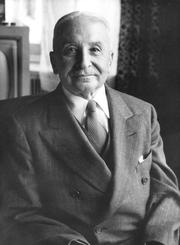
Ludwig von Mises
1881 – 1973
Ludwig von Mises (1881–1973) was the leading spokesman of the Austrian School of Economics throughout most of the twentieth century. He earned his doctorate in law and economics from the University of Vienna in 1906. In 1926, Mises founded the Austrian Institute for Business Cycle Research. From 1909 to 1934, he was an economist for the Vienna Chamber of Commerce. Before the Anschluss, in 1934 Mises left for Geneva, where he was a professor at the Graduate Institute of International Studies until 1940, when he emigrated to New York City. From 1948 to 1969, he was a visiting professor at New York University.
Reviews
No reviews yet — be the first to write one from the Log screen.
Quotes
No quotes yet.