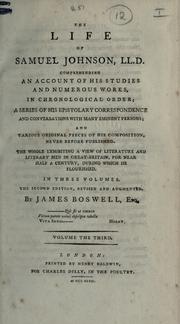
Colored people
Social life and customsCriticsAfrican American scholarsAfrican AmericansChildhood and youth
4.0
Open LibraryAbout this book
In this rich memoir of his early life, the celebrated scholar and writer Henry Louis Gates, Jr., gives us an indelible portrait of a vanished America. Born in 1950, he grew up in Piedmont (population 2,565), a West Virginia town perched on the side of a hill in the Allegheny Mountains. He was raised in a small, intimate, middle-class "colored" community where secrets and haircuts were prime commodities and the major social event was the annual mill picnic. It was a time when the United States was just crossing the threshold into desegregation (the Piedmont schools were integrated the year before Gates entered first grade); when racial boundaries were constantly shifting and progress was measured primarily by the number of black faces that appeared on television. But Gates's story is not only a story about race. It is the story of a family, of a village, and of a special time and place in American history. Gates vividly recalls the characters who peopled his childhood: from his first love, the bookworm Linda, to Uncle Earkie the Turkey, who shared his views on the opposite sex with whoever would listen, to his grandmother Big Mom, founder of the local Episcopal church, to the exuberant Reverend Monroe, who captured many a soul. And of course the person who had the greatest influence on young Skip, his mother - a fearless, determined woman who was famous for her delivery of eulogies at funerals, who was the first colored secretary of the Piedmont PTA, and who, as an older woman, triumphantly acquired the house where she had worked as a young girl. Through Gates's memories…
Themes & subjects
Social life and customsCriticsAfrican American scholarsAfrican AmericansChildhood and youthBiography
Characters & people
Setting
United StatesWest Virginia
About the author
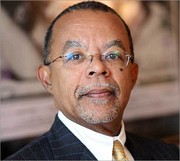
Henry Louis Gates, Jr.
16 September 1950
Henry Louis "Skip" Gates Jr. is an American literary critic, teacher, historian, filmmaker and public intellectual who currently serves as the Alphonse Fletcher University Professor and Director of the Hutchins Center for African and African American Research at Harvard University. He has discovered what are considered the first books by African-American writers, both of them women, and has published extensively on appreciating African-American literature as part of the Western canon. - Wikipedia
Reviews
No reviews yet — be the first to write one from the Log screen.
Quotes
No quotes yet.