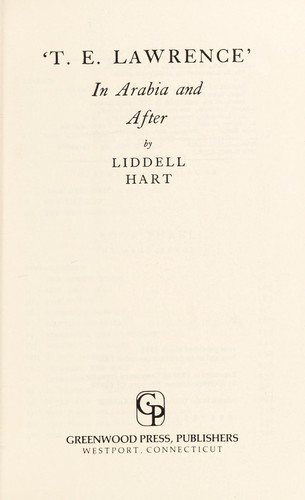
T. E. Lawrence
0.0
Open LibraryAbout this book
T.E. Shaw, better known as Lawrence of Arabia, was one of the most romantic, heroic, and enigmatic figures of his day. The subject of myth and hagiography, he was equally accomplished in several fields--as archaeologist, diplomat, writer, and soldier--and he worked throughout World War I and after in the Middle East in efforts to promote independent Arab states. His autobiography Seven Pillars of Wisdom is one of the greatest works of its kind. The esteemed military historian B.H. Liddell Hart wrote this study of Lawrence in order to pierce the clouds of legend. He discussed Lawrence's Oxford days, his experiences as an intelligence officer in Egypt, and in particular the tactics of guerrilla warfare he practiced so effectively against the large Turkish armies during World War I. Liddell Hart was one of the few to give Lawrence his full justice as both a man and a brilliant soldier. Long out-of-print, this book unravels the many puzzling features of Lawrence's story and restores him to his proper place as one of the twentieth century's heroic, but very human, figures.
Themes & subjects
BiographyCampaignsSoldiersWorld War, 1914-1918ArchaeologistsBritish
First published 1935Characters & people
Setting
Arab countriesArabian PeninsulaGreat BritainArabiaTurkey and the Near EastMiddle East20th century
About the author
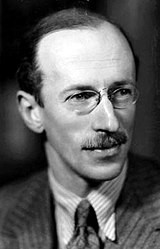
B. H. Liddell Hart
31 Oct 1895 – 29 Jan 1970
Sir Basil Henry Liddell Hart (31 October 1895 – 29 January 1970), commonly known throughout most of his career as Captain B. H. Liddell Hart, was a British soldier, military historian and military theorist. He wrote a series of military histories that proved influential among strategists. He argued that frontal assault was a strategy that was bound to fail at great cost in lives as happened in the First World War. He instead recommended the "indirect approach" and reliance on fast-moving armoured formations. His pre-war publications are known to have influenced German wartime strategy, though he was accused of prompting captured generals to exaggerate his part in the development of blitzk…
Reviews
No reviews yet — be the first to write one from the Log screen.
Quotes
No quotes yet.