0.0
Open LibraryAbout this book
This volume is the first ever English translation of Kant's last major work, the so-called Opus Postumum, a work Kant himself described as his 'chef d'oeuvre' and as the keystone of his entire philosophical system. It occupied him for more than the last decade of his life. Begun with the intention of providing a 'transition from the metaphysical foundations of natural science to physics, ' Kant's reflections take him far beyond the problem he initially set out to solve. In fact, he reassesses a whole series of fundamental topics of transcendental philosophy: the thing in itself, the nature of space and time, the concept of the self and its agency, the idea of God, and the unity of theoretical and practical reason. Though never completed, the text reaches a logical albeit not fully developed, conclusion.--Provided by publisher.
Themes & subjects
TranscendentalismPhilosophyPhysicsFilosofía alemanaPhysiqueTranscendantalisme
About the author
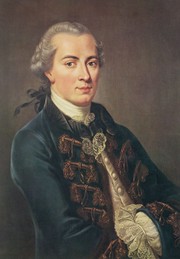
Immanuel Kant
22 April 1724 – 12 February 1804
Immanuel Kant was an 18th-century German philosopher from the Prussian city of Königsberg. Kant was the last influential philosopher of modern Europe in the classic sequence of the theory of knowledge during the Enlightenment beginning with thinkers John Locke, George Berkeley, and David Hume. Kant created a new perspective in philosophy which had widespread influences on philosophy continuing through to the 21st century. He published important works on epistemology, as well as works relevant to religion, law, and history. One of his most prominent works is the *Critique of Pure Reason*, an investigation into the limitations and structure of reason itself. It encompasses an attack on trad…
Reviews
No reviews yet — be the first to write one from the Log screen.
Quotes
No quotes yet.