The Last Theorem
by Arthur C. Clarke, Frederik Pohl
FictionScience FictionFermat's last theoremMathematiciansPhysicists
3.0
Open LibraryAbout this book
The final work from the brightest star in science fiction's galaxy. Arthur C Clarke, who predicted the advent of communication satellites and author of 2001: A Space Odyssey completes a lifetime career in science fiction with a masterwork.
Themes & subjects
FictionScience FictionFermat's last theoremMathematiciansPhysicistsPropulsion systems
About the authors

Arthur C. Clarke
16 December 1917 – 19 March 2008
Sir Arthur Charles Clarke CBE FRAS was a British science fiction writer, science writer and futurist, inventor, undersea explorer, and television series host. He is famous for being co-writer of the screenplay for the 1968 film 2001: A Space Odyssey, widely considered to be one of the most influential films of all time. Clarke was a science writer, who was both an avid populariser of space travel and a futurist of uncanny ability. On these subjects he wrote over a dozen books and many essays, which appeared in various popular magazines. In 1961 he was awarded the Kalinga Prize, an award which is given by UNESCO for popularising science. These along with his science fiction writings eventu…
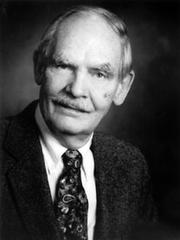
Frederik Pohl
26 November 1919 – 2 September 2013
Frederik Pohl, Jr. was born in Brooklyn, New York. His father held a number of jobs, and his family moved many times in his childhood before settling in Brooklyn when he was about seven. He attended Brooklyn Tech high school, but dropped out and took a job to help support his family. As a teen, he founded the New York science fiction writer's group The Futurians. His first publication, a poem, appeared in Amazing Stories in 1937, when he was 18 years old. In 1936, he joined the Young Communist League and became President of the Brooklyn branch, but he left it in 1939 after Stalin-Hitler pact. In 1939, at the age of 21, he was editor of both Super Science Stories and Astonishing Stories…
Reviews
No reviews yet — be the first to write one from the Log screen.
Quotes
No quotes yet.