fraeon
Films
BrowseTop 250
Series
TV ShowsAnimeTop 250 TVTop 100 Anime
Games
BrowseTop 100
Books
BooksMangaTop 125 BooksTop 100 Manga
For youTrendingTier ListsThe ArchiveLeaderboard
Log inSign up free
fraeon

Everything you watch, play and read — tracked, rated and remembered in one library.

Explore

  • Films
  • TV
  • Anime
  • Games
  • Books
  • Manga

Discover

  • Trending
  • Leaderboard
  • Find people
  • Lists
  • Tier lists

Company

  • Tour
  • About
  • Community guidelines
  • Privacy
  • Terms
  • Contact

© 2026 fraeon. All rights reserved. ·

Metadata from TMDB, RAWG, Jikan & Open Library. This product uses the TMDB API but is not endorsed or certified by TMDB.

Questions or ideas? mehmet@avortas.com

HomeFeedProfile
What algorithms want

What algorithms want

by Ed Finn

Social aspectsComputersAlgorithmsInformation technologyComputers, social aspects
4.4
Open Library
Open Library

About this book

We depend on--we believe in--algorithms to help us get a ride, choose which book to buy, execute a mathematical proof. It's as if we think of code as a magic spell, an incantation to reveal what we need to know and even what we want. Humans have always believed that certain invocations--the marriage vow, the shaman's curse--do not merely describe the world but make it. Computation casts a cultural shadow that is shaped by this long tradition of magical thinking. In this book, Ed Finn considers how the algorithm--in practical terms, "a method for solving a problem"--has its roots not only in mathematical logic but also in cybernetics, philosophy, and magical thinking. Finn argues that the algorithm deploys concepts from the idealized space of computation in a messy reality, with unpredictable and sometimes fascinating results. Drawing on sources that range from Neal Stephenson's Snow Crash to Diderot's Encyclopédie, from Adam Smith to the Star Trek computer, Finn explores the gap between theoretical ideas and pragmatic instructions. He examines the development of intelligent assistants like Siri, the rise of algorithmic aesthetics at Netflix, Ian Bogost's satiric Facebook game Cow Clicker, and the revolutionary economics of Bitcoin. He describes Google's goal of anticipating our questions, Uber's cartoon maps and black box accounting, and what Facebook tells us about programmable value, among other things. If we want to understand the gap between abstraction and messy reality, Finn argues, we need to build a model of "algorithmic reading" and scholarship that attends to proc…

Themes & subjects

Social aspectsComputersAlgorithmsInformation technologyComputers, social aspects

Author

Ed Finn

Pages

272

Read time

≈ 7h

Editions

4

Language

English

Publisher

MIT Press

ISBN

9780262338837

Where to buy

TR
Amazon Bookshop

Reviews

No reviews yet — be the first to write one from the Log screen.

Quotes

No quotes yet.
Discussions

Similar books

Sense and Sensibility

Fiction, Romance, Historical, Regency · Inheritance and succession, fiction

Sense and Sensibility

Jane Austen

1811

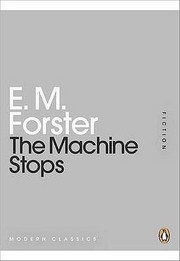
The Machine Stops

English literature · Children's fiction

The Machine Stops

E. M. Forster

1909

Democracy and Education

Education · Philosophy

Democracy and Education

John Dewey

1916

Major Barbara

Social aspects of Crime · Fathers and daughters

Major Barbara

George Bernard Shaw

1909

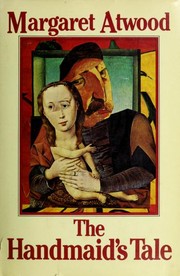
The Handmaid's Tale

brothels · Canadian authors

The Handmaid's Tale

Margaret Atwood

1985

Die protestantische Ethik und der Geist des Kapitalismus

Capitalism · Christian ethics

Die protestantische Ethik und der Geist des Kapitalismus

Max Weber

1700

May Day

Social aspects · World War, 1914-1918

May Day

F. Scott Fitzgerald

2004

The house behind the cedars

Fiction · Passing (Identity)

The house behind the cedars

Charles Waddell Chesnutt

1900

El Señor Presidente

Fiction · Politics and government

El Señor Presidente

Miguel Ángel Asturias

1948

Government by the people

Politics and government · Local government

Government by the people

James MacGregor Burns

1952

The English Patient

Fiction · World War, 1939-1945

The English Patient

Michael Ondaatje

1992

A man could stand up

World War, 1914-1918 · Fiction

A man could stand up

Ford Madox Ford

1926

A Canticle for Leibowitz

Hugo Award Winner · award:hugo_award=1961

A Canticle for Leibowitz

Walter M. Miller Jr.

1959

The Scarlet Plague

Fiction · American Science fiction

The Scarlet Plague

Jack London

1910

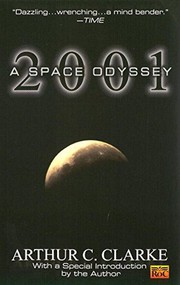
2001

Human-computer interaction · Computers

2001

Arthur C. Clarke

1968

I, Robot

smear campaigns · supercomputers

I, Robot

Isaac Asimov

1950

Artemis Fowl

Artemis Fowl · Eoin Colfer

Artemis Fowl

Eoin Colfer

1999

Player Piano

Fiction · Classic Literature

Player Piano

Kurt Vonnegut

1952