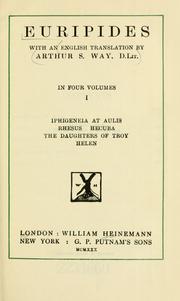
Hecuba
by Euripides
Trojan WarHécube (Personnage légendaire)Andromache (Legendary character)Translations into Englishgreat_books_of_the_western_world
0.0
Open LibraryAbout this book
"In the three great war plays contained in this volume Euripides subjects the sufferings of Troy's survivors to a harrowing examination. The horrific brutality which both women and children undergo evokes a response of unparalleled intensity in the playwright whom Aristotle called the most tragic of poets. Yet the new battle-ground of the aftermath of war is one in which the women of Troy evince an overwhelming greatness of spirit. We weep for the aged Hecuba in her name play and in the Trojan Women, yet we respond with an at times appalled admiration to her resilience amid unrelieved suffering. And in her name play Andromache, the slave-concubine of her husband's killer, endures her existence in the victor's country with a stoic nobility. Of their time yet timeless, these plays insist on the victory of the female spirit amid the horrors visited on them by gods and men during war."--BOOK JACKET.
Themes & subjects
Trojan WarHécube (Personnage légendaire)Andromache (Legendary character)Translations into Englishgreat_books_of_the_western_worldHecuba (Legendary character) in literature
Characters & people
Setting
Troy (Extinct city)
About the author
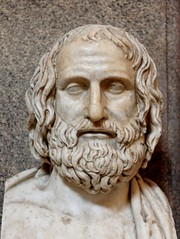
Euripides
480 BCE – 406 BCE
Euripides was the last of the three great tragedians of classical Athens (the other two being Aeschylus and Sophocles). Ancient scholars thought that Euripides had written ninety-five plays, although four of those were probably written by Critias. Eighteen or nineteen of Euripides' plays have survived complete. There has been debate about his authorship of Rhesus, largely on stylistic grounds and ignoring classical evidence that the play was his.[1] Fragments, some substantial, of most of the other plays also survive. More of his plays have survived than those of Aeschylus and Sophocles together, because of the unique nature of the Euripidean manuscript tradition. ([Source][1].) [1]…
Reviews
No reviews yet — be the first to write one from the Log screen.
Quotes
No quotes yet.