Τρῳάδες
by Euripides
Trojan WarGreek dramaGreek drama (Tragedy)Andromache (Legendary character)Translations into English
4.4
Open LibraryAbout this book
"The Trojan Women" is a play by the 5th century B.C. Greek dramatist Euripides. The story takes place at the end of the Trojan war and is focused on the Greeks' division of the spoils, who happen to be the survivors of the ten year war, the Trojan women. The main protagonist is Hecuba, the queen of Troy, and through her and her daughter Cassandra and her daughter in law Andromache (widow of Hecuba's son Hector) we are led through the process by which the surviving Trojan women realize the horrors of their fates. Euripides shows us via an insistent sense of immediacy incident by incident, step by inevitable step, through a messenger, what their individual fates are to be and that there can be no reprieve. The horrors of war these women faced for ten years will not abate simply because the battle has ended. The play is as topical now as when it was written for during the writing Athens and Sparta were involved in their long and ruinous Peloponnesian war. It is known Euripides was opposed to this war. And the chaos this war brought ended Athenian democracy.
Themes & subjects
Trojan WarGreek dramaGreek drama (Tragedy)Andromache (Legendary character)Translations into Englishgreat_books_of_the_western_world
Characters & people
Setting
Troy (Extinct city)TurkeyTroy (Extinct citiy)The Trojan War
About the author
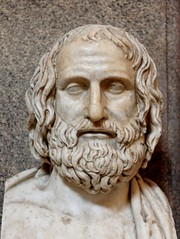
Euripides
480 BCE – 406 BCE
Euripides was the last of the three great tragedians of classical Athens (the other two being Aeschylus and Sophocles). Ancient scholars thought that Euripides had written ninety-five plays, although four of those were probably written by Critias. Eighteen or nineteen of Euripides' plays have survived complete. There has been debate about his authorship of Rhesus, largely on stylistic grounds and ignoring classical evidence that the play was his.[1] Fragments, some substantial, of most of the other plays also survive. More of his plays have survived than those of Aeschylus and Sophocles together, because of the unique nature of the Euripidean manuscript tradition. ([Source][1].) [1]…
Reviews
No reviews yet — be the first to write one from the Log screen.
Quotes
No quotes yet.