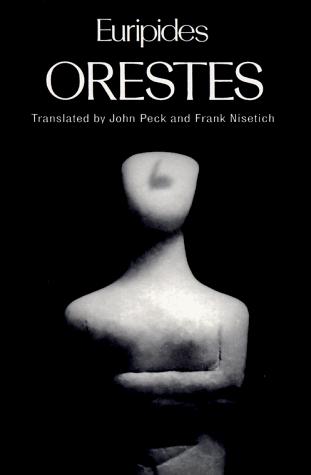
Orestes
by Euripides
DramaOrestes (Greek mythology)great_books_of_the_western_worldOrestes (Greek mythology) -- DramaContinental european drama (dramatic works by one author)
0.0
Open LibraryAbout this book
Produced more frequently on the ancient stage than any other tragedy, Orestes retells with striking innovations the story of the young man who kills his mother to avenge her murder of his father. Though eventually exonerated, Orestes becomes a fugitive from the Furies (avenging spirits) of his mother's blood. On the brink of destruction, he is saved in the end by Apollo, who had commanded the matricide. Powerful and gripping, Orestes sweeps us along with a momentum that, starting slowly, builds inevitably to one of the most spectacular climaxes in all Greek tragedy.
Themes & subjects
DramaOrestes (Greek mythology)great_books_of_the_western_worldOrestes (Greek mythology) -- DramaContinental european drama (dramatic works by one author)Poesia dramatica grega
About the author
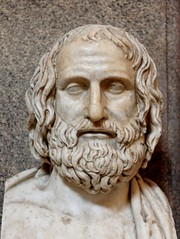
Euripides
480 BCE – 406 BCE
Euripides was the last of the three great tragedians of classical Athens (the other two being Aeschylus and Sophocles). Ancient scholars thought that Euripides had written ninety-five plays, although four of those were probably written by Critias. Eighteen or nineteen of Euripides' plays have survived complete. There has been debate about his authorship of Rhesus, largely on stylistic grounds and ignoring classical evidence that the play was his.[1] Fragments, some substantial, of most of the other plays also survive. More of his plays have survived than those of Aeschylus and Sophocles together, because of the unique nature of the Euripidean manuscript tradition. ([Source][1].) [1]…
Reviews
No reviews yet — be the first to write one from the Log screen.
Quotes
No quotes yet.